

Four implants, one fixed bridge, one jaw. What the technique can do, who it suits, who it does not, and how treatment runs from the first scan to the final prosthesis.
All-on-4 is a way of restoring a whole jaw with a fixed bridge carried by four implants. It is not a brand and not a separate kind of implant — it is a placement strategy, and understanding that strategy is what tells you whether it fits your mouth.
This guide covers what the four implants are actually doing, which findings make the technique a good fit, which ones point elsewhere, and what the treatment looks like from the first scan through to the final bridge.
Why Four Implants Can Carry a Whole Jaw
In a jaw that has been without teeth for some time, bone loss is rarely even. The front of the jaw usually keeps more volume, while the back — where the sinus sits in the upper jaw and the nerve canal runs in the lower — loses height first. That pattern is the reason the technique exists.
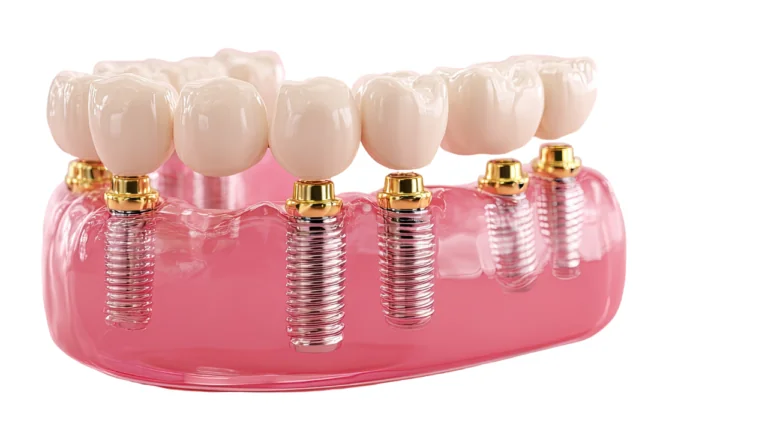
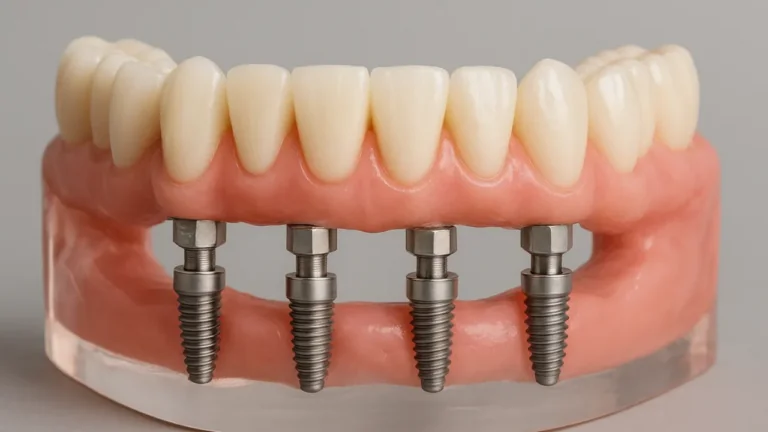
All-on-4 places two implants upright at the front, where bone is most reliable, and two more towards the back at an angle. Tilting those rear implants lets them engage the denser bone that is still there, and it moves their emergence point further back than a straight implant could reach. The bridge therefore has a wider footprint to sit on, and the unsupported span at the very back of the arch stays short.
The bridge itself matters as much as the implants. It is one rigid piece connecting all four, so a bite force landing on one tooth is shared across the whole framework rather than being absorbed by a single implant. Four separate implants carrying four separate crowns would behave very differently.
Who the Technique Suits
The clearest candidates are people whose remaining teeth cannot be saved and who want something fixed rather than removable. If you are already wearing a full denture and the main complaint is movement, looseness or the plate covering the palate, a fixed bridge answers all three.
| Finding | What it usually means |
|---|---|
| Front bone volume adequate, back bone reduced | The situation the technique was designed for |
| Bone adequate throughout the arch | All-on-6 becomes worth comparing |
| Severe loss at the front as well | Grafting or a different approach is assessed first |
| Active gum infection around remaining teeth | Treated before any implant is placed |
| Heavy clenching or grinding history | Load management changes the plan; more support points are considered |
| Uncontrolled diabetes, smoking, some medications | Healing is affected; assessed individually, not an automatic no |
The last row is the one people most often assume rules them out. It does not, by itself. What it changes is the preparation, the healing time allowed before loading and the follow-up interval — and those are decisions made after the scan, with you in the chair, not from a form.
What Happens, Step by Step
- Examination and 3D scan. A cone beam scan shows bone height, width and density at every point of the arch, plus the position of the sinus and the nerve canal. This is where the technique is either confirmed or set aside.
- Planning. Each implant position and angle is decided on the scan before anything is done in the mouth, so the surgery follows a plan rather than improvising around what is found.
- Surgery. Any teeth that cannot be kept are removed and the four implants are placed in the same session, under local anaesthetic. Sedation is available for people who want it.
- Temporary bridge. If the implants achieve enough initial stability, a fixed temporary bridge goes on straight away. You leave with teeth. If stability is borderline, waiting is the safer call — and it is a call worth accepting.
- Healing. Bone integrates with the implant surface over roughly two to three months. During this period you eat soft, and the temporary bridge does the work.
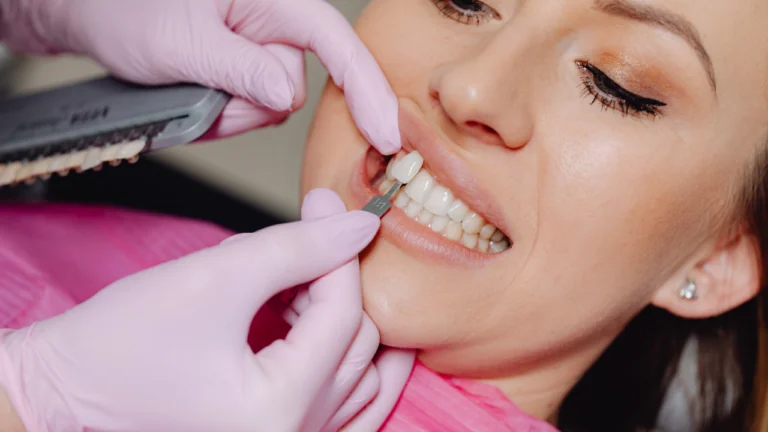
- Final bridge. Once integration is confirmed, the definitive bridge is made. Fit, bite and appearance are checked and adjusted before it is fitted.
The temporary bridge is not a cosmetic courtesy. It protects the surgical site, keeps your bite height stable while the tissues settle, and lets us see how you speak and chew before the final one is made. Anything that needs changing gets changed at that stage, while changing it is still easy.
Living With a Fixed Bridge
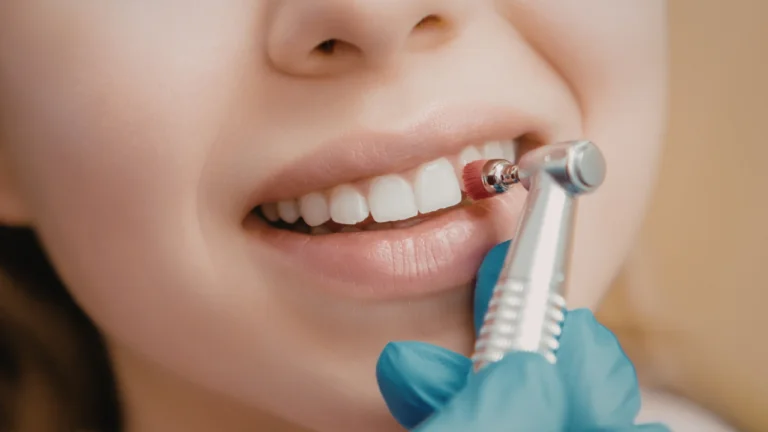
The bridge does not come out at home, so cleaning happens around and under it rather than by soaking it. In practice that means a soft brush, a water flosser or interdental brush aimed under the bridge where it meets the gum, and a professional clean at the intervals we set for you. That underside is where problems start when they start at all.
A night guard is often part of the plan for people who clench. Implants have no periodontal ligament, so they do not give the sensory feedback that natural teeth use to limit force — which is exactly why protecting the framework overnight is worth doing.
The other habit worth keeping is the review appointment. Screws can loosen, bites shift as tissues mature, and both are simple to correct when they are caught early. We check the fit, the bite and the tissue at each review.
What We Guarantee
Every treatment we carry out is covered by our lifetime guarantee, on both the materials and the workmanship. That guarantee is ours, given directly by the clinic to you — it is not passed on from a supplier and it does not run out after a set number of years.
We also do not publish price lists, and we do not quote figures over the phone. A jaw restoration depends on how many teeth need removing, what the bone looks like on the scan and what the opposing jaw is doing. Any number given before that scan would be a guess, and a guess is not something you should have to plan around.
Your first examination at our clinic in Bagcilar, Istanbul is free, including the imaging needed to answer the question properly. You will leave knowing whether All-on-4 fits your case, what the alternative would be, and how long the treatment takes. If you want to read further first, our page on All-on-4 in Turkey and the one comparing All-on-4 against All-on-6 both go deeper.