











Why Your Situation Is Different
Almost everything written about dentistry in Turkey addresses people flying in for a week, and very little of it applies to someone living here. The differences are worth naming because they change what you should be looking for.
Continuity is the first. A dentist who has seen your mouth over several years notices changes that a single examination does not, and that longitudinal view is the most valuable thing in routine dentistry. It is also the one thing a treatment trip cannot provide.
Prevention is the second. What you actually need most of the time is examinations, hygiene appointments and the occasional filling — the ordinary care that keeps large treatment from becoming necessary.
Convenience is the third and it works in your favour. Staging treatment across several appointments, coming back for an adjustment, having something reviewed in a month — all of it is straightforward when you live nearby.
So the sensible approach is the opposite of a treatment trip: establish a relationship first, do the routine things properly, and let any larger treatment follow from an assessment rather than from a decision made in advance.
If you have moved here from Britain or Ireland, two things carry over that are worth reading about separately: what happens to NHS entitlement while you are living abroad, and whether Irish tax relief still applies to treatment received in Türkiye once you are resident here.
Choosing a Dentist as a Resident in Türkiye
Different criteria from choosing one for a single treatment, and worth thinking about deliberately rather than defaulting to whoever is nearest.
Language matters more here than for a one-week visit, because you will have dozens of short conversations over years rather than one long one. A practice where you can explain a symptom easily is worth travelling further for.
Location matters because you will actually go. A dentist twenty minutes away gets visited for a check-up; one across the city gets visited when something hurts, which is the wrong pattern.
Consistency of clinician matters. Ask whether you will see the same dentist each time — a practice where you see whoever is available loses the continuity that is the main advantage of living here.
And the same checks apply as anywhere: a written plan when treatment is proposed, materials named, and a clinician who tells you when nothing needs doing — what a proper consultation covers is the same standard whether you live here or fly in.
How Coverage Works
Varies by residence status and by what you have arranged, and it is worth establishing before you need it rather than at an appointment.
Turkey has a public health insurance system, and eligibility for it depends on your residence and employment situation. Dental coverage within it is limited and weighted towards essential rather than restorative or cosmetic care.
Private health insurance is widely used and dental cover within it varies enormously by policy. Some include routine dental, some offer it as an add-on, and many exclude it entirely.
Most expats end up paying directly for dental care, which is straightforward and, at local prices, considerably less burdensome than the equivalent in most Western countries.
Check your own position with the relevant authority or insurer rather than relying on a general description. What applies to you depends on your permit type, your employment and your policy, and none of those are things a clinic page can determine.
What Routine Care Looks Like
Broadly what it looks like anywhere, with a few differences worth knowing about so nothing is a surprise.
| What | How often | Notes |
|---|---|---|
| Examination | Every six months, or as advised | Shorter interval after gum treatment |
| Hygiene appointment | Six-monthly, or three to four after periodontal treatment | The main preventive appointment |
| Bitewing radiographs | At an interval set by your risk | Decay between teeth is invisible without them |
| Fillings | As needed | Composite is standard; one appointment |
| Children's check-ups | Six-monthly from the first teeth | Prevention rather than treatment |
| Emergency appointments | Same or next day at most practices | Establish where to go before you need it |
The interval is the part that benefits from continuity. A patient at low risk does not need the same recall as one who has had periodontal treatment, and only a dentist who knows your history can set it sensibly.
The emergency row is worth acting on in advance. Knowing where you would go, before you need to go there, is the single most useful thing on this list.
Where gum treatment turns out to be needed, living here changes it substantially. The re-evaluation stage happens weeks after the active phase, which is trivial as a resident and awkward for a visitor.
Bringing Your Records With You
One of the most useful things you can do when you move, and one almost nobody thinks of until it would have helped.
Ask your previous dentist for copies of your radiographs, treatment history and any periodontal charting. You are entitled to them in most countries, and requesting them before you leave is far easier than afterwards.
Radiographs matter most. A new dentist looking at your teeth for the first time sees a snapshot; the same dentist with images from three years ago sees a trend, and a trend is what identifies a problem early.
Periodontal charting is the second. Gum measurements from before you moved turn a first assessment into a comparison, which changes what can be concluded from it.
And any implant records specifically. The implant passport records the manufacturer and lot number of every fixture, and it is essential if anything ever needs servicing.
Photographs are worth requesting too. A record of what your teeth looked like before you moved is useful for any future comparison, and it costs your previous dentist nothing to include with the rest of the file.
Work Done Before You Arrived
A common situation and one that occasionally causes unnecessary anxiety, so it is worth setting out plainly.
Existing crowns, bridges, implants and fillings are assessed on their condition rather than their origin. A well-made restoration from anywhere is a well-made restoration, and there is no reason to replace something functioning.
Where a restoration is failing, the question is what to do about it rather than who made it. Sometimes it is repairable, sometimes it needs replacing, and the assessment is the same as for anything else.
Implants are the case where records matter most. Components are proprietary and system-specific, so servicing an implant placed elsewhere requires knowing which system it is — which is why the passport is worth chasing.
Be cautious of a wholesale recommendation to replace existing work. Sound restorations should generally be left alone, and a plan proposing to redo everything deserves a reason for each item.
Dentistry for Children
Frequently the reason an expat family looks for a dentist at all, and the considerations differ from adult care.
The aim at this age is prevention and building a relationship with dentistry that is not frightening. A child whose early appointments were calm and unhurried becomes an adult who attends; one whose were not becomes an adult who avoids.
Routine check-ups from the first teeth, fluoride application where indicated, and fissure sealants on the permanent molars are the standard preventive measures. None of them is dramatic and together they prevent a great deal.
Where extensive treatment is needed in a young or anxious child, behaviour management or treatment under general anaesthesia may be what makes it possible at all — how that is approached is set out separately.
Language matters particularly here. A child who cannot understand what is being explained to them has a worse experience regardless of how gentle the treatment is, and that is worth solving rather than working around.
Orthodontics for Residents
One area where living here is a substantial advantage over travelling, and it is worth knowing if it is on your list.
Fixed appliances need adjustment every four to eight weeks, which is trivial when you live nearby and effectively impossible when you do not. That opens the full range of orthodontic options rather than only the remotely-managed ones.
It also means a wider set of cases can be treated properly. Complex movements, bite correction and extraction cases are all more straightforward when review is routine rather than logistically difficult.
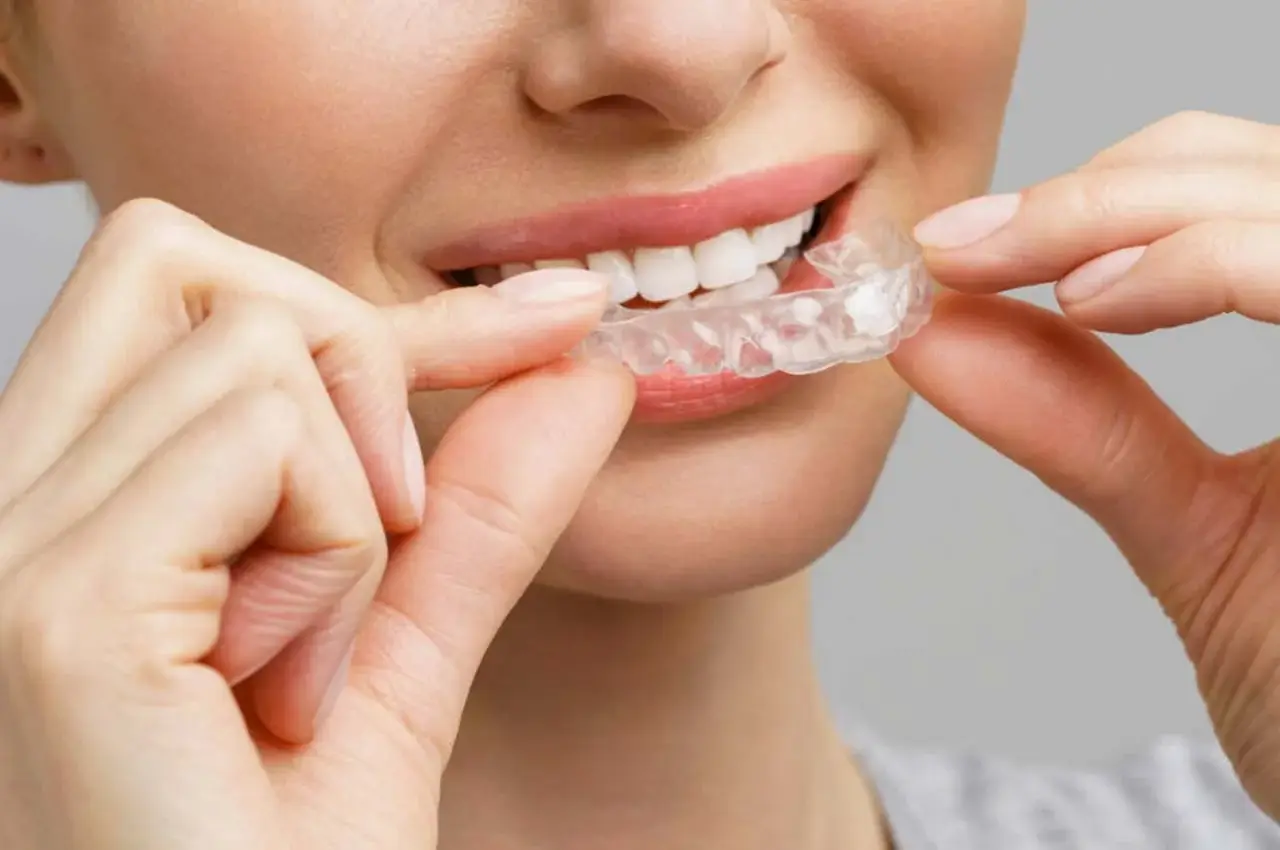
Aligners remain a good option and the calculation changes — the convenience of batches matters less when attending is easy, so the choice returns to being purely clinical.
The comparison of what each can move is where that decision belongs, and as a resident you get to make it on clinical grounds alone rather than around a travel schedule.
Retention is the other advantage. A bonded retainer needs checking periodically to confirm it has not debonded at one end, and that is a two-minute appointment when you live nearby and an impossibility when you do not.
Emergencies
The situation where being a resident matters most, and the one worth preparing for before it arises.
Know where you would go. Most practices see emergencies the same or next day, and having a practice you are already registered with is considerably better than searching while in pain.
Understand what counts as urgent. Swelling that is spreading, difficulty swallowing or breathing, and fever with facial swelling need immediate attention. A broken tooth or a lost filling does not, though both need seeing soon.
A knocked-out permanent tooth is the one genuine emergency where minutes matter. Handle it by the crown rather than the root, put it back in the socket if you can, and if not keep it in milk — the immediate steps are worth reading before you need them.
Pharmacies are widespread and pharmacists are helpful for pain relief in the meantime. What they cannot do is treat the cause, and painkillers masking an infection delays treatment rather than replacing it.
Where a tooth is genuinely lost rather than damaged, the replacement decision follows quickly. What replaces it is easier to plan properly when you live here, because the socket can be reviewed and grafted at the right moment rather than fitted around a flight.
The Language Question, Day to Day
Different from the treatment-trip version because the interactions are more frequent and shorter, which changes what matters.
For routine appointments you need to describe a symptom, understand an answer and follow an instruction. That is a lower bar than a consent discussion for major surgery and a higher one than ordering coffee.
Practices serving international residents generally work in English, and many in other languages depending on the local population. What matters is whether the clinician you actually see does, not whether someone in the practice does.
For anything significant — a treatment plan, consent, aftercare — the same standard applies as for any patient. It should be in writing, in a language you control, and why that is a clinical matter does not change because you live here.
Learning the vocabulary for your own recurring issues is worth an evening. A handful of words about sensitivity, pain and cleaning covers most routine conversations for years.
The written standard is the one that carries over. Guarantee terms and treatment plans belong in a language you control regardless of how comfortable the routine conversations become.
Cost as a Resident
Straightforward and worth stating, because expats frequently arrive with expectations calibrated to their previous country.
You are paying local prices for local care. That is generally considerably less than the equivalent in Western Europe, North America or Australia, and it applies to routine care as much as to large treatment.
The practical consequence is that prevention becomes very affordable. Six-monthly hygiene appointments and regular examinations cost little enough that skipping them makes no economic sense at all.
For larger treatment the same principles apply as anywhere: a written plan tooth by tooth, materials named, and an explanation of what the conservative alternative would be.
The dental tourism dynamics do not apply to you. You are not under time pressure, you have not paid for flights, and you can take a plan away and think about it — which is a considerably stronger position than a visiting patient occupies.
Budget for the ongoing rather than only the occasional. Two hygiene appointments and an examination a year is a small predictable cost that prevents a considerably larger unpredictable one, and it is the best value in dentistry anywhere.
Setting It Up Properly
A short sequence when you arrive, and doing it before anything hurts is the whole point.
- Request your records from your previous dentist before you leave, or afterwards by email.
- Establish what dental coverage, if any, your insurance or residence status provides.
- Find a practice within a distance you will actually travel.
- Book a full examination rather than waiting for a problem.
- Ask for baseline radiographs and periodontal charting to start a record here.
- Agree a recall interval based on your own risk rather than a default.
- Find out where you would go in an emergency, and save the number.
The fifth is the one that pays off over years. A baseline recorded now is what makes every future examination a comparison rather than a fresh look, and it costs one appointment.
The seventh takes two minutes and is the one people regret skipping. Knowing where to go at eleven at night is worth arranging while nothing hurts.
Where you already know larger treatment is coming, raise it at that first appointment rather than later. An implant plan benefits from being designed on a stable mouth, and as a resident you have the time to do the foundation work first.
How We Work With Residents
The same clinical standards as with anyone, with the emphasis shifted towards continuity rather than completion.
A full baseline at the first visit — examination, periodontal charting, radiographs and photographs — so that every subsequent appointment is a comparison against a record rather than a fresh assessment.
A recall interval set from your own risk rather than a default six months. Someone with a history of periodontal disease needs a shorter one; someone at low risk does not need to attend more often than necessary.
Existing work assessed on its condition rather than its origin. Sound restorations from anywhere are left alone, and where something is failing we say why that specific item needs attention.
And the same written plan when treatment is proposed, with materials named and the conservative alternative stated — plus a lifetime guarantee on materials and workmanship on everything placed, with the exclusions set out plainly.
And a plan that can be staged rather than compressed. Living nearby means treatment can be sequenced properly — gums first, healing intervals respected, restorative work last — without any of the compromises a one-week visit imposes.