










What Genuinely Needs Another Person
One thing, and it is specific. Sedation beyond the mildest level requires somebody to accompany you afterwards — not a taxi, a person — because judgement and coordination are affected for hours after you feel entirely normal.
That applies to oral sedation, intravenous sedation and general anaesthesia. It does not apply to treatment under local anaesthetic alone, which is the great majority of dental treatment including most implant surgery.
Inhalation sedation is the exception within the exception. It clears within minutes of stopping, requires no fasting and no escort, and you can travel and function normally afterwards — which makes it the practical sedation option for a solo patient.
Where deeper sedation is genuinely needed and you are alone, it is arranged rather than refused. Clinics treating international patients handle this routinely, and it needs saying at the booking stage so it can be planned.
Everything else — extractions, implant placement, grafting, restorative work of any size — is done under local anaesthetic and you go about your day afterwards as the sedation levels set out.
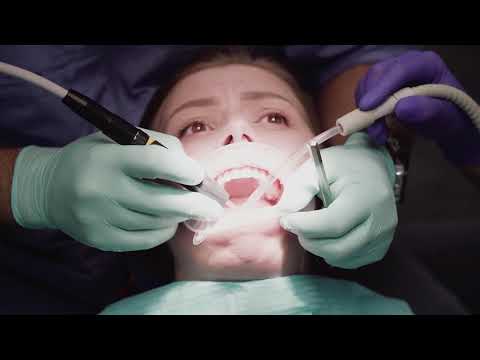
Wisdom tooth surgery is the case where the question arises most often, because it is the procedure patients most frequently want sedation for. It is done under local anaesthetic as standard, so sedation is a choice rather than a requirement.
What Only Appears To
Several things feel as though they need a companion and do not, and it is worth naming them because the anxiety is common and the reality is undramatic.
Getting to and from the clinic. Transfers are arranged and a driver meets you, so there is no navigation to do while numb or uncomfortable. That covers the airport in both directions and the appointment days in between.
Understanding the treatment. Clinical conversations happen in your own language and the plan, consent and aftercare instructions are given in writing, so there is no reliance on remembering a conversation or on someone else having listened.
The day of surgery itself. You are fully conscious throughout under local anaesthetic, you walk out, and the main requirements afterwards are rest, cold compresses and soft food — none of which needs a second person.
And the flight home. Cabin pressure does not meaningfully affect a healing site for most treatment, though where surgery was involved we schedule it early in the trip so the flight home does not fall on the swelling peak. The aftercare instructions cover what to take on board.
Travelling Alone to İstanbul — What to Arrange in Advance
A short list, and all of it is easier before you travel than during. None of it is specific to being alone except the first, and the first is the one that matters.
| What | Why it matters alone | When to sort it |
|---|---|---|
| Tell the clinic you are alone | Changes sedation options and scheduling | When booking |
| Accommodation near the clinic | Removes travel on the day after surgery | Before flights |
| A local SIM or eSIM | Sending a photograph is the fastest way to get an answer | On arrival or before |
| Soft food in the room | Day one after surgery is not a day for going out | The day before |
| Pain relief bought in advance | You will not want to find a pharmacy | The day before |
| Clinic out-of-hours number saved | Not buried in an email you would have to search | Before travelling |
| Someone at home who knows the plan | One person who knows where you are and when | Before travelling |
The last row is the one people skip and it costs nothing. One person at home with your itinerary, the clinic's name and your appointment dates is a sensible precaution for any solo trip and it is not specific to dentistry.
The fourth and fifth are the ones that make the day after surgery comfortable. Having them in the room removes the only genuinely awkward part of recovering by yourself.
The Day After Surgery, Planned
The day worth thinking about deliberately, because it is the one where being alone is most noticeable and it is entirely manageable with an hour of preparation.
Swelling peaks around day two or three rather than immediately, so the day after surgery is usually more comfortable than people expect. What it is not is a day for exertion, sightseeing or long journeys.
Have cool soft food already in the room — yoghurt, smooth soup, ice cream, purée. Cold is genuinely helpful in the first day, and having it to hand means not going out to find it.
Take pain relief before the anaesthetic wears off rather than after, and have the next dose ready. Staying ahead of it requires less overall than catching up, and it makes the first evening substantially easier.
Keep your head elevated when resting, apply cold to the outside of the face in intervals, and message the clinic with a photograph if anything concerns you. That last is the whole substitute for having someone in the room.
Read the aftercare instructions before the surgery rather than afterwards. Several of them are about things to arrange in advance, and the day you most need them is the day you least want to be reading.
Communication as Your Backup
The practical replacement for a companion, and it works better than most people expect once it is set up properly rather than improvised.
A photograph attached to a message resolves most post-treatment questions within hours. That requires data rather than hotel wifi, which is why a local SIM or an eSIM is on the list above.
Save the clinic's direct contact on your phone rather than leaving it in an email thread. At two in the morning, searching an inbox is the wrong moment to discover you did not.
Know which questions need an immediate answer and which can wait. Spreading swelling, fever or difficulty swallowing need local emergency care rather than a message; a loose temporary or a high bite can wait until morning. Bleeding that has not stopped after twenty minutes of firm continuous pressure on rolled gauze, or that restarts heavily, needs the out-of-hours number straight away — do not wait until morning and do not assess it alone.
And keep one person at home informed. Not because anything is likely to happen, but because it costs a single message and it removes the background worry that makes a solo trip feel heavier than it is.
Photographs are the whole mechanism, and they work better than description. A clear image of a site that concerns you tells us in seconds what a paragraph cannot — taken in daylight rather than under a bathroom light for the same reasons that apply to any dental photograph.
Choosing Where to Stay
It matters more when you are alone than when you are not, and the calculation is different from an ordinary trip.
Close to the clinic is worth more than a good location, because the journey on the day after surgery is the thing you will most want to avoid. Istanbul traffic makes distance unpredictable in a way that matters when you are uncomfortable.
Somewhere with a kettle or a kitchen is worth more than a restaurant downstairs. Soft food for several days is considerably easier when you are not eating every meal out, and it removes a small daily decision.
Somewhere with reliable reception staff matters too. A solo patient who needs something at an odd hour benefits from somewhere staffed, which is not always true of short-let apartments.
Where we arrange accommodation, these are the considerations it is arranged around — how transfers and accommodation work sets out what is included and what to confirm.
Where the clinic arranges it, all of this is already accounted for. What the first visit involves sets out how the days are structured, and accommodation is chosen against that rather than against a map.
The Free Days
Most treatment plans have gaps, and a solo trip is not a reason to spend them in a hotel room. Istanbul is an easy city to be alone in.
The metro is straightforward, unaffected by traffic, and reaches most of what anyone would want to see from this side of the city. It removes the main difficulty of moving around a large unfamiliar place by yourself.
Eating alone is unremarkable here, and the food is good at every level. That is not a small point for a solo traveller in a city where it might have been awkward.
The exception is the day of surgery and the day after, which are for rest. Planning the sightseeing for the middle of the trip rather than the beginning or end is the sequencing that works.
What is worth seeing with limited time is set out with travel times from Bağcılar rather than from a tourist hotel, which is the relevant distance.
Where the plan spans a week with laboratory time in the middle, that gap is genuinely yours. The timetable shows where the gaps fall, which lets you plan the free days rather than discovering them.
If Something Happens While You Are Alone
The plan that makes solo travel comfortable rather than merely feasible, and it has three steps in order.
First, for anything urgent — spreading swelling, fever, difficulty breathing or swallowing — seek local emergency care immediately. Do not wait for a reply from anyone. That is true whether you are alone or not.
Second, for anything else, message the clinic with a photograph. Most concerns are identified immediately from a clear image and a substantial proportion are resolved with advice rather than an appointment.
Third, where an appointment is needed, it is arranged and a transfer with it. Being alone does not make that harder; the arrangements are the same ones already in place for your appointment days.
Knowing that sequence in advance is what removes the anxiety. The situations are uncommon, they are all handled, and none of them requires a companion to resolve.
Having the sequence written down somewhere you can find it is worth the two minutes. At three in the morning in an unfamiliar city, a note on your phone is considerably more use than trying to remember what a website said.
Where Being Alone Genuinely Changes the Plan
Three situations, and in each the answer is to say so early rather than to manage it on the day.
Deeper sedation, as above. It needs an escort and that is arranged when you book, not requested on the morning. Where it cannot be arranged, inhalation sedation or local anaesthetic alone remains entirely workable for the same procedures.
Extensive surgery in a single session. Where a very long appointment is planned — a full arch, multiple extractions with grafting — the recovery day is more demanding and the preparation matters more.
Any medical condition that could complicate recovery. That is a reason to declare it clearly at the planning stage rather than a reason not to travel, and the medical history is where it belongs.
Outside those three, travelling alone changes nothing about the treatment. It changes what you arrange around it, and everything on this page is that arrangement.
In each of those the answer is the same: raise it at the planning stage. A clinic told in advance can arrange around it; a clinic told on the morning of an appointment is improvising with a patient already in the chair.
The Honest Reassurance
Worth stating directly rather than implying, because the anxiety about this is common and mostly unfounded.
The majority of international dental patients travel alone. It is the normal case rather than the exception, and clinics treating international patients are organised around it rather than surprised by it.
The treatment itself does not become harder. Local anaesthetic works the same way, the appointments run the same length, and the recovery follows the same curve whether or not someone is sitting in the waiting room.
What changes is logistics, and logistics are solvable in advance. Transfers, accommodation, food, medication and a phone that works — that is the entire list, and it takes an hour to sort.
What does not change is the standard of the treatment or what you are entitled to ask for. A solo patient gets the same written plan, the same explanation and the same records as anyone else.
Bringing Someone Anyway
The other side, because some patients would prefer company and should not feel the alternative is expected of them.
A companion is genuinely useful for a long treatment plan, mostly for the consultation rather than the surgery. Two people hearing the same explanation remember more of it, and complex plans involve a great deal of detail.
They also make the recovery day easier in small practical ways — fetching food, being there to notice if something seems wrong, and simply being company on a day spent resting.
Where sedation is planned, having brought someone removes the escort arrangement entirely. That is the one place a companion changes what is possible rather than only what is comfortable.
Confirm what is included for a companion explicitly rather than assuming. A room for one and a room for two are different bookings, and that assumption causes more friction than any other in this area.
For a full-arch plan in particular it is worth considering. That treatment involves a long surgical session and a more demanding recovery day than most, and a companion changes the experience of it noticeably.
How We Handle Solo Patients
The same as anyone else in every clinical respect, with three specific things arranged differently.
Tell us when you book. That single piece of information changes what sedation can be offered, how appointments are scheduled and what is arranged around the recovery day, and it is far easier to plan for than to improvise.
Transfers cover every journey rather than only the airport — accommodation to clinic and back on every appointment day, and the return to the airport at the end. There is nothing to navigate while numb or uncomfortable.
Where deeper sedation is appropriate and you are alone, the escort is arranged rather than the sedation being refused. That is a routine arrangement for clinics treating international patients.
And you leave with everything in writing — plan, aftercare, records and a direct contact that answers out of hours. The practical arrival guide covers the rest of the trip.
None of that is a special service and none of it costs extra. It is what a clinic treating international patients arranges as a matter of course, and it is worth asking any clinic the same questions before booking.