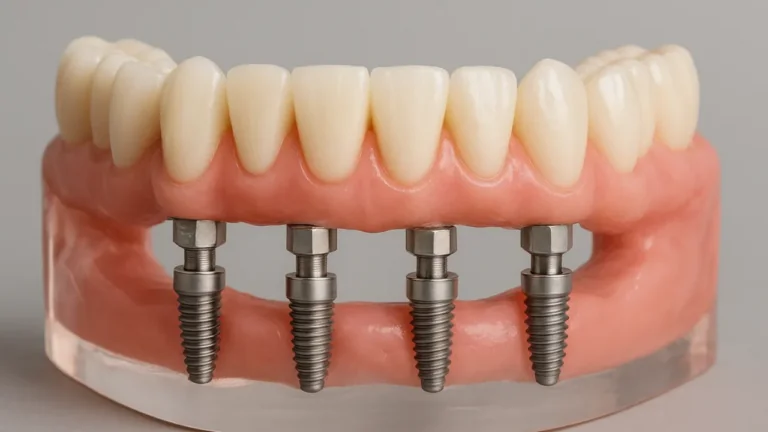
Modern implants show survival above ninety-five per cent at ten years, and that figure is supported by large clinical series. But survival and success are not the same thing: an implant still being in the mouth is one measure; the bone and gum around it being healthy is another. We follow the second.
What loses implants in the long run is not fracture but inflammation of the tissue around them. While it is confined to the gum — peri-implant mucositis — it is reversible. Once bone has been lost — peri-implantitis — it can usually be stabilised, but the lost bone does not come back. That is the real reason the early review appointments matter.
The implant itself cannot decay. That is an advantage and it is also misleading: a natural tooth gives early warning through pain and sensitivity, and an implant gives none. A problem can progress with nothing felt at all. Six-monthly checks are therefore not optional for an implant patient.
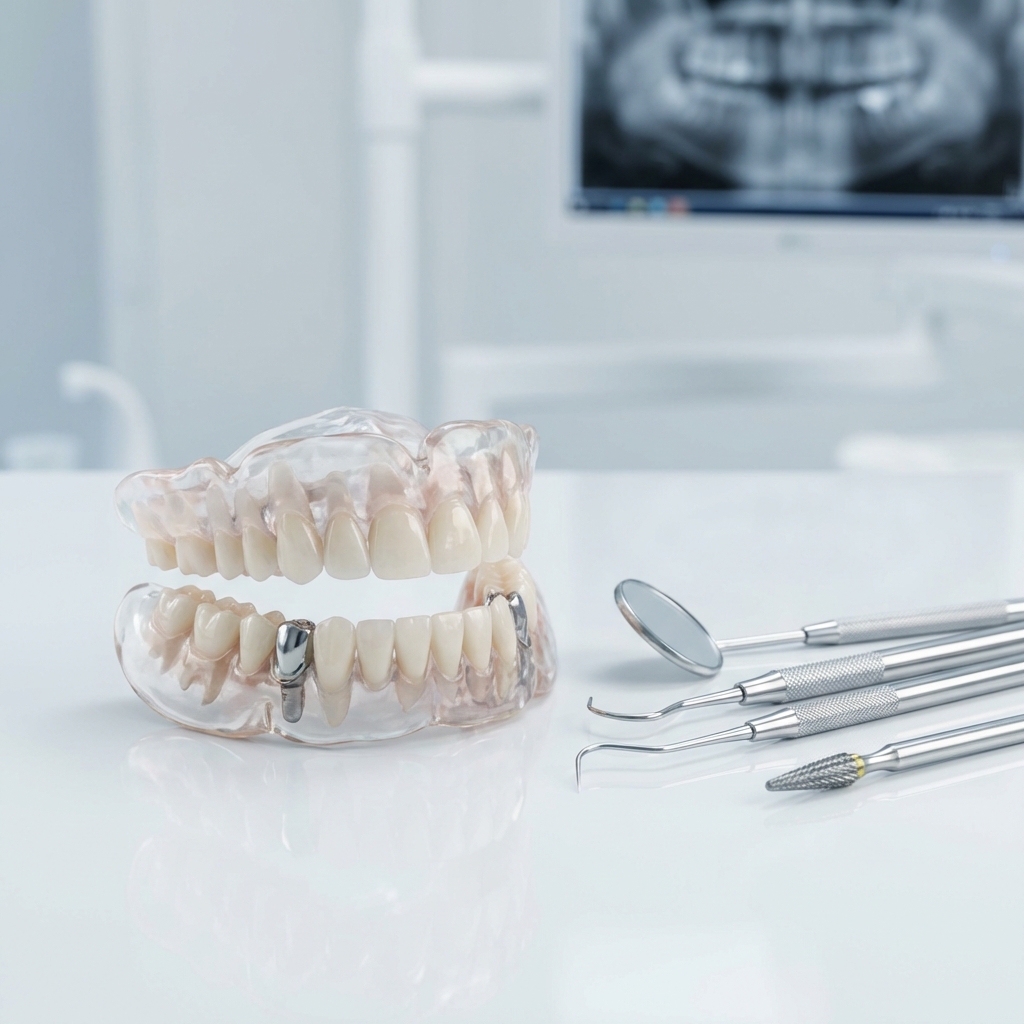
The lifespan of the restoration is separate from that of the implant. A crown can chip, a screw can loosen, retentive components wear. These are maintenance items rather than failures, and they should be stated at the outset.
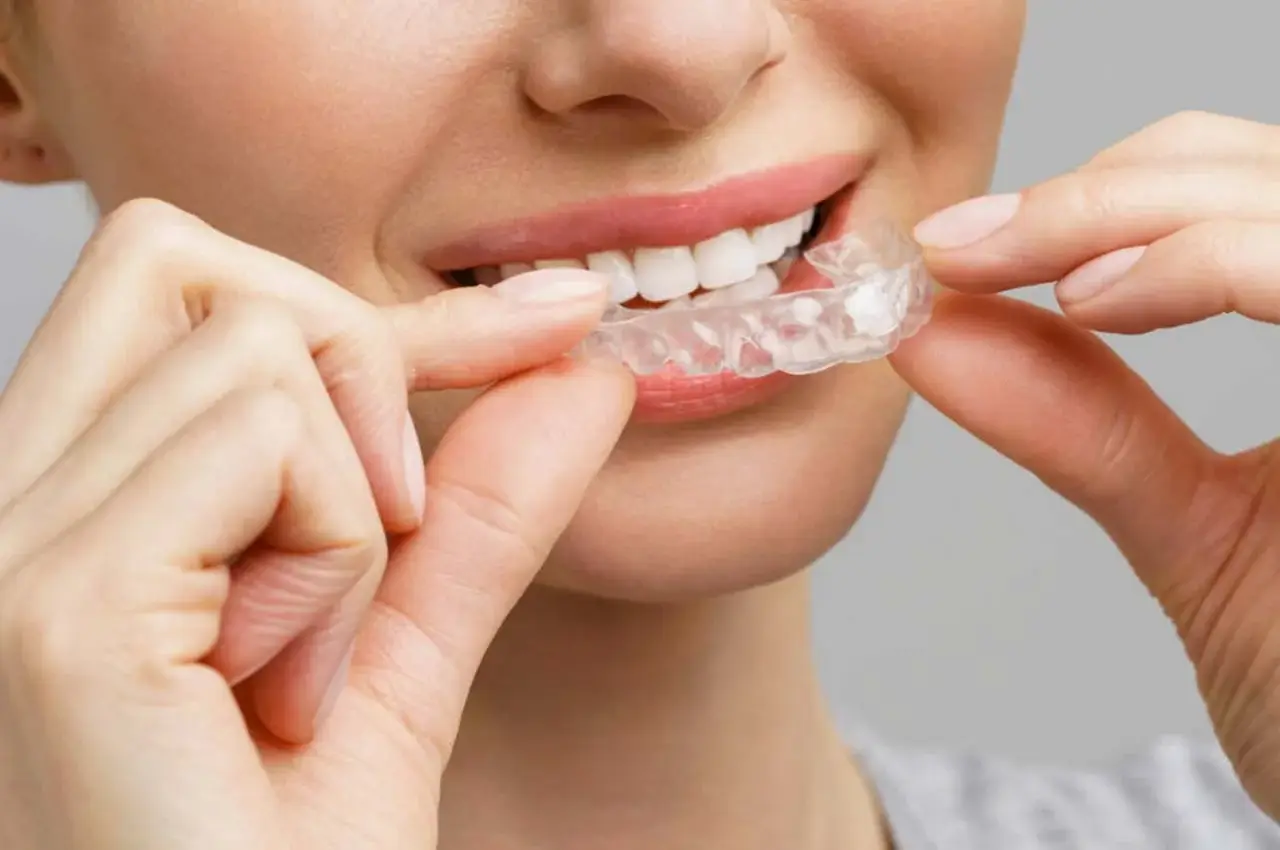
If you grind, a night guard is the cheapest and most decisive part of this picture. Ceramic works every night under a load it was not designed for, and an implant has no nerve reflex to limit that force. The guard is made during the same course of treatment as the restoration.
Like every treatment carried out here, the implant and the prosthetic work on it carry a lifetime guarantee on materials and workmanship. What the guarantee covers and what falls outside it — accidental damage, neglect, missed recommended check-ups — is set out plainly and in writing.