











How Dental Qualification Works in Turkey
Dentistry here is a five-year undergraduate degree taken directly after secondary school, at a university faculty of dentistry. It is a primary degree rather than a postgraduate one, which is the same structure used across much of Europe.
Graduates are licensed by the Ministry of Health to practise as a dentist. That licence is what permits general practice, and it covers the great majority of what happens in any clinic — examination, restorations, root treatment, extractions, crowns and prosthetics.
Specialisation is a separate postgraduate programme of several years, ending in a specialist qualification and a separate registration. It is competitive and it is a genuine additional credential rather than a title adopted by interest.
The distinction matters when you are reading a clinic's website. "Specialist in implantology" is not a recognised speciality in most systems including this one; oral surgery and periodontology are. A clinician may be highly experienced in implants without holding a speciality, and that is not a criticism — it is simply a different claim.
So the useful question is not whether someone calls themselves a specialist but what registration they hold. That is a factual answer and a clinic can produce it in a message.
Clinics are licensed separately from the people in them. A private dental polyclinic holds a Ministry of Health operating licence covering premises, equipment, sterilisation and staffing, and clinics treating international patients hold an additional health tourism authorisation — which credentials mean what sets out how to read the rest.
The Specialities That Actually Exist
Six are relevant to most treatment plans, and knowing what each covers helps you understand who should be doing what in a complex case.
| Speciality | What it covers | When it matters to you |
|---|---|---|
| Oral and maxillofacial surgery | Surgical extractions, implants, grafting, sinus procedures | Complex surgery, impacted teeth, severe bone loss |
| Periodontology | Gum disease, periodontal surgery, tissue grafting, implant tissue management | Moderate to advanced gum disease, recession, gum contouring |
| Prosthodontics | Crowns, bridges, dentures, full-mouth rehabilitation, bite reconstruction | Extensive restorative plans, worn bites, full arches |
| Orthodontics | Tooth movement — fixed appliances, aligners, growth guidance | Alignment, bite correction, pre-restorative movement |
| Paediatric dentistry | Children's dentistry, behaviour management, treatment under general anaesthesia | Any treatment for a child, particularly anxious or extensive |
| Endodontics | Root canal treatment, retreatment, surgical root procedures | Failed root treatments, complex canal anatomy |
A complex plan frequently involves more than one. A full-arch case can touch surgery, prosthodontics and periodontology, and asking who handles which stage is a reasonable question rather than a difficult one.
Who You Can Expect Here
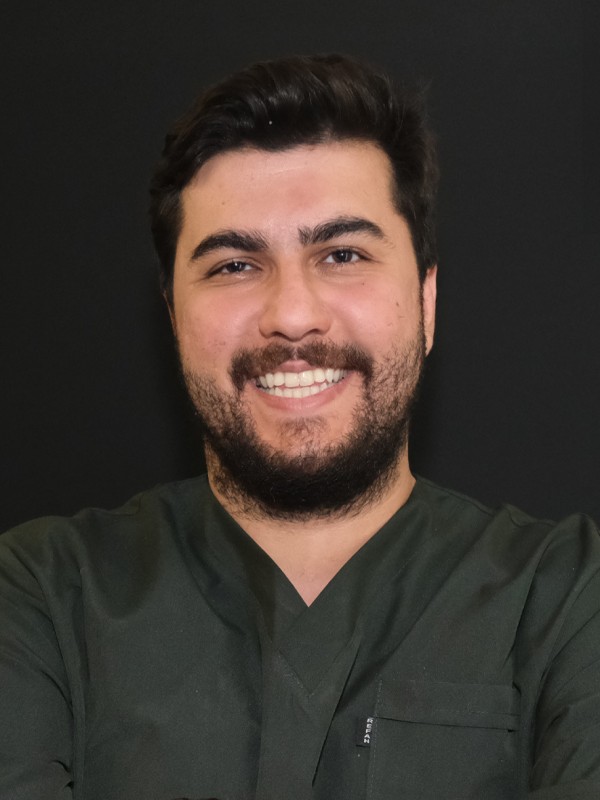
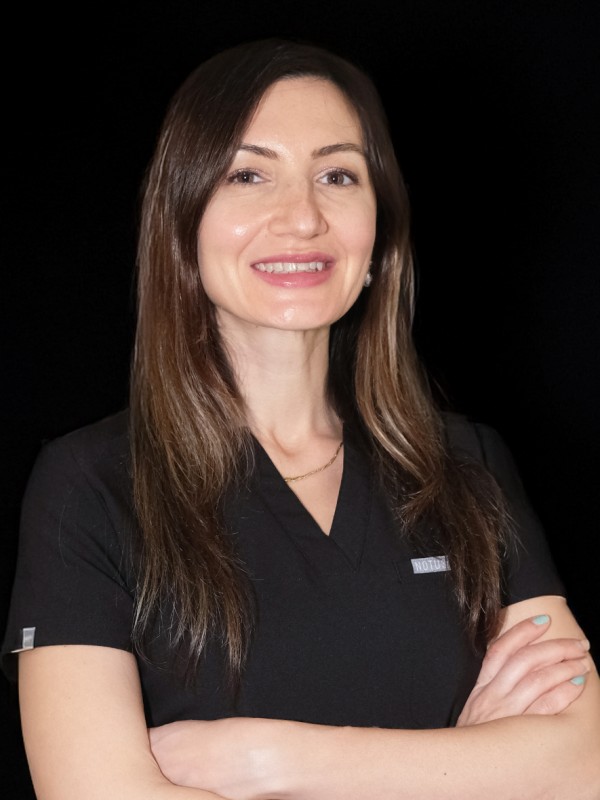
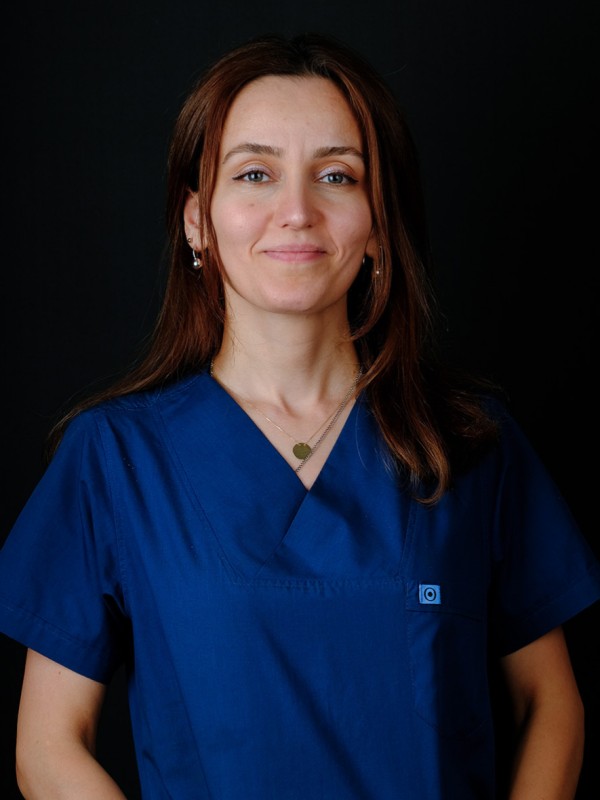
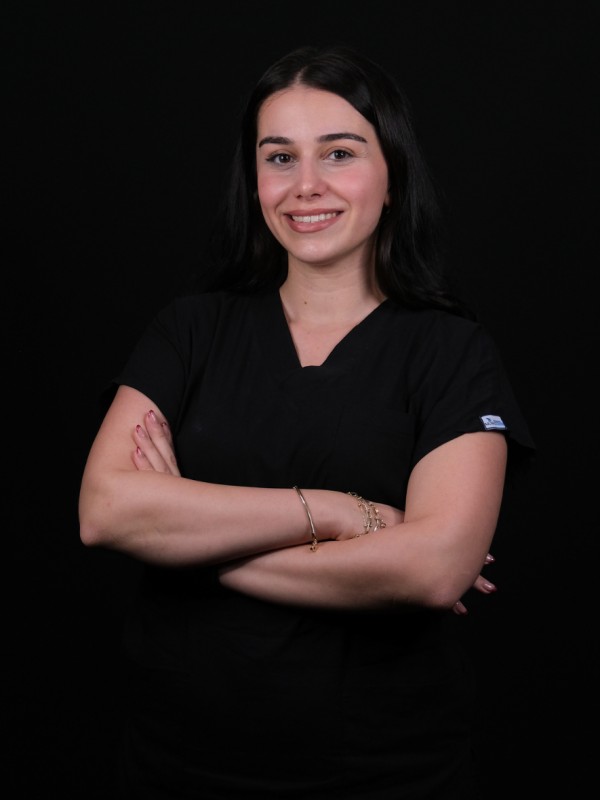
Two of our clinicians are named specifically because their specialities come up most often in questions from patients travelling with families or with alignment as part of the plan.
Dr. Dt. Hakan Şahin works in paediatric dentistry. That covers children's treatment generally, and specifically the cases where a child needs extensive work — where behaviour management, or treatment under general anaesthesia, is what makes the treatment possible at all.
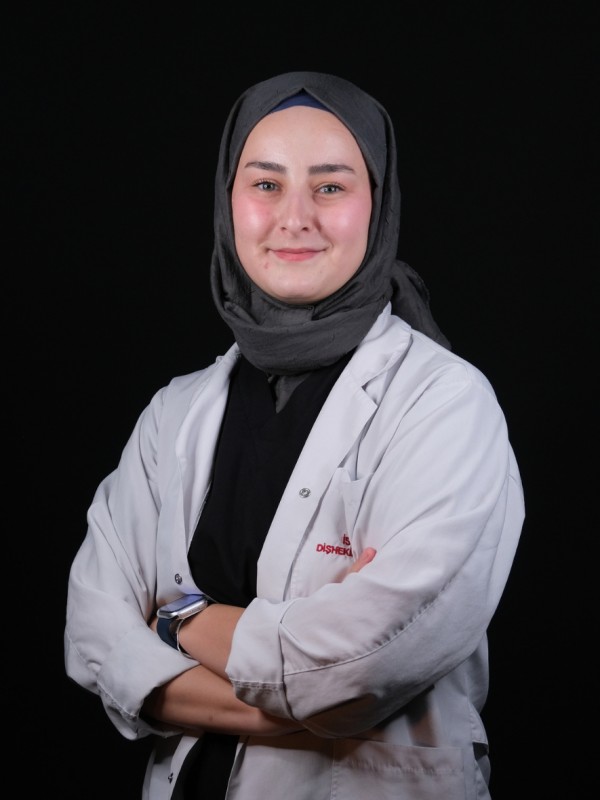
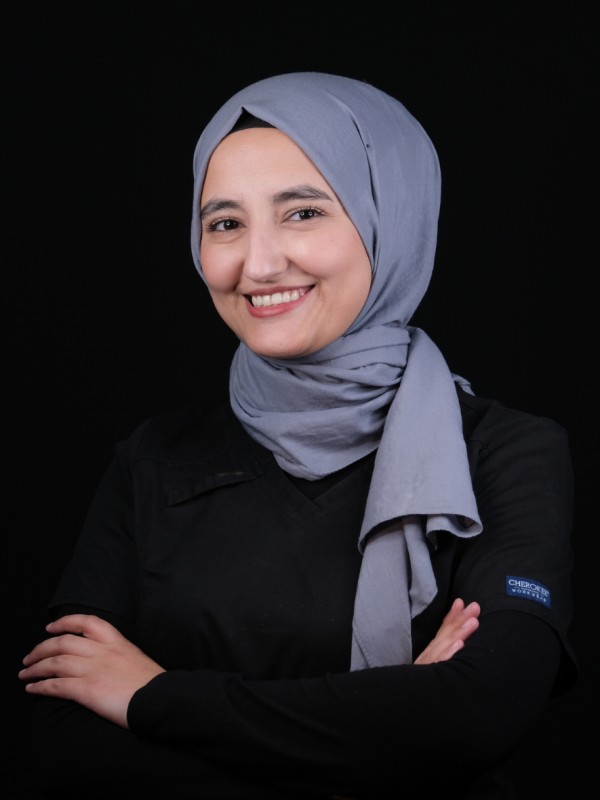
Dr. Dt. Ceren Çetinkaya works in orthodontics — fixed appliances and clear aligners, including the remote-managed arrangements that make aligner treatment practical for a patient living in another country.
For everything else, the clinician who will carry out your treatment is named in your written plan before anything is agreed — by name, with their registration, and with which stages they are performing where a plan spans more than one.
That is a deliberate choice over publishing a gallery of faces. A photograph grid tells you nothing about who is treating you; a name in your own plan is specific, checkable and attached to a commitment.
Why "Our Team" Is Not an Answer
This is the single most common evasion in health tourism and it is worth recognising for what it is rather than accepting as normal.
In some arrangements the patient meets a coordinator, agrees a plan, and is treated by whichever clinician is available on the day. Nobody has lied, and the patient has no idea who performed their surgery or how to reach them afterwards.
That matters most for surgery. If an implant fails in five years, the questions are which system was used, where it was placed and by whom — and the third is the one that becomes unanswerable.
It also matters for consistency. A plan discussed with one clinician and delivered by another loses the reasoning behind it, and the details that were explained verbally do not travel with the file.
The correction is simple: ask for the name in writing before you commit. A clinic that answers immediately is operating normally, and one that deflects has told you something without meaning to — the wider set of checks covers what else that pattern predicts.
What to Ask, and What a Good Answer Looks Like
Six questions, all answerable in one message by a clinic that has thought about them. None require dental knowledge to interpret.
- Who will perform my treatment, by name?
- What is their qualification, and do they hold a speciality registration?
- Where a plan has several stages, who does which?
- Will I meet them before treatment, in person or by video?
- If I have a question after I fly home, who does it reach?
- Can you send the clinic licence and health tourism authorisation?
The fourth is more revealing than it looks. A clinician who talks to you before treatment has taken responsibility for the plan; one you meet for the first time on the day of surgery has inherited it.
The fifth determines what happens in the years afterwards, which is when most questions actually arise. An answer naming a person is better than an answer naming a department.
The sixth is separate from the clinicians and equally checkable. Clinics are licensed by the Ministry of Health, and those treating international patients hold an additional health tourism authorisation. Both are documents.
Verifying a Clinician
Harder than it should be across borders, and there are still several things worth doing that take very little time.
Ask directly for the registration and the university and year of graduation. Those are ordinary facts and the reluctance to give them, rather than the content of the answer, is usually the finding.
Search the name independently of the clinic's own website. A clinician with years of practice usually leaves some trace — professional association membership, conference participation, published work, or simply a longer history at that clinic.
Look for consistency. A name that appears with different qualifications on different pages, or a photograph that appears on several unrelated clinic websites, answers the question quickly.
And ask whether they will speak to you before you travel. Fifteen minutes on a video call establishes more than any amount of biography — you learn how questions are handled, which is what you actually need to know.
Experience Versus Speciality
A genuine nuance that is often flattened in one direction or the other, and both flattenings are misleading.
A speciality registration is a documented credential and it means something real. Years of postgraduate training in a defined field, examined, and registered separately. Where a case is complex, it is a reasonable thing to want.
Experience without a speciality is also real. A general dentist who has placed implants for fifteen years and continues to train may be more capable in that specific procedure than a recently qualified specialist. That is not a controversial statement.
What distinguishes them is verifiability. A registration is a fact; "twenty years of experience" is a claim, and it is the claim most commonly inflated on clinic websites.
So weigh both, and weigh the specific case. Straightforward treatment in experienced general hands is entirely appropriate; complex surgery, severe periodontal disease or a full reconstruction are where a speciality earns its place.
Who Actually Makes Your Restorations
A question almost nobody asks, and for restorative work the answer affects the result as much as the dentist does.
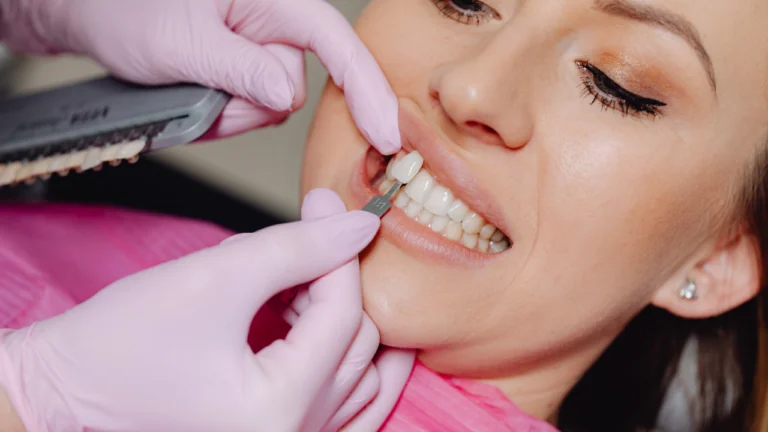
The dentist prepares the teeth and bonds the restorations. The dental technician designs and builds what goes on them — the shape, the shade, the translucency gradient, the surface texture. That is where a restoration stops looking like a restoration.
Technicians are a separate profession with their own training, and the difference between a good one and an average one is visible from across a room in a way that is difficult to describe and easy to recognise.
Ours works in the building, which means the technician can see you in person for shade rather than working from a written code, and corrections take hours rather than a courier cycle — what the in-house laboratory changes sets out the practical effect.
It is worth asking any clinic where the work is made and whether the technician will see you. Very few patients ask, and the answers separate clinics quickly.
It shows most on front teeth. The gradient from a slightly more saturated neck to a more translucent edge is built by hand, and it is the difference between a result that reads as natural and one that reads as uniform white.
The Rest of the Team
Treatment involves more people than the clinician, and two of the roles are worth understanding because they affect your experience directly.
Dental nurses assist during treatment, prepare and sterilise instruments, and manage the surgical field. In implant surgery the nurse's role in maintaining sterility is not incidental — it is part of what makes the field sterile at all.
Coordinators handle scheduling, transfers, accommodation and communication in your language. That is a legitimate and useful role, and it becomes a problem only where the coordinator is the only person you deal with.
The line worth holding is that clinical questions are answered by clinicians. A coordinator relaying a treatment explanation is a game of telephone, and it is where plans lose their reasoning.
You should be able to speak to the person treating you, in your own language, about the clinical decisions — and that is a different conversation from the one about flights and hotels.
Language, and Why It Is a Clinical Issue
Treated as a convenience and it is not. Consent given in a language you do not fully understand is not consent, and planning decisions are too detailed to survive approximation.
Three points in a treatment plan need genuine precision. The consultation, where options are explained and chosen between. The consent discussion, where risks and alternatives are covered. And the aftercare instructions, where misunderstanding has real consequences.
Clinical conversations here happen in your own language, and the written material — plan, consent, aftercare, guarantee — is given in it as well rather than translated verbally on the day.
Where a family member translates, that is welcome and it does not replace the arrangement. Medical vocabulary is specific, and asking a relative to carry a consent discussion is unfair to both of you.
How interpreting is arranged sets out which languages are covered and how it works across the stages of a plan.
It matters most where a decision is being made rather than described. Choosing between two restorations or agreeing how many teeth are in a plan are conversations that need precision, and they are exactly the ones a relayed translation flattens.
Continuity Across Visits
Where a plan runs across two or three trips, months apart, the question of who you see becomes a question of who remembers.
Seeing the same clinician matters most where judgement was involved — a borderline tooth kept rather than extracted, a shade agreed after discussion, a bite position tested and adjusted. Those decisions live partly in the conversation.
Records carry the rest, which is why they matter. A plan written tooth by tooth with reasons, photographs, scans and material specifications means the file is complete even where a colleague picks it up.
Ask, when a plan spans visits, whether you will see the same clinician at each. The answer should be yes for the stages that require it, and a clinic that has thought about it will say which stages those are.
And ask what happens if you need something after the plan is finished — years later, from another country. That is when the guarantee terms and the name attached to your file become the practical question.
Implant plans are where this matters most, because the surgical and restorative stages are months apart. The records from the surgical visit — including the implant passport — are what make the second stage straightforward whoever is holding the file.
What We Commit To
Stated plainly so it can be held against us, which is the only version of this worth publishing.
The clinician performing your treatment is named in your written plan before anything is agreed, with their registration. Where a plan has several stages handled by different clinicians, the plan says which.
You speak to that clinician before treatment — by video before you travel, or in person at the consultation. The plan is explained by the person who wrote it rather than relayed by someone else.
Clinical conversations happen in your language, and the plan, consent, aftercare and guarantee are given to you in writing in it. Coordinators handle logistics; clinicians answer clinical questions.
You leave with records naming who did what: the plan, radiographs, material specifications, the implant passport where implants were placed. Everything placed carries a lifetime guarantee on materials and workmanship — and the consultation is where all of it is established rather than assumed.
The One Question to Ask Any Clinic
Everything on this page reduces to one thing: whether the clinic is willing to attach a name to a commitment. That is not really a question about credentials — it is a question about how a practice operates.
A named clinician in a written plan means someone has taken responsibility for the reasoning behind it. If a tooth was kept rather than extracted, or four teeth were proposed rather than twenty, a person decided that and can explain why.
An unnamed team means the plan exists independently of anyone's judgement, and that is the condition under which over-treatment becomes structurally likely rather than merely possible.
So ask the question early, in writing, before flights are booked. The answer costs the clinic nothing to give and it predicts most of what follows — including how a guarantee claim will be handled years from now, when the file needs a person attached to it.
We publish this page rather than a gallery for that reason. The commitment is in your plan rather than on our website, which is where it is actually worth something.