












Why We Point You to the Official Source
It would be easy to publish a list of countries and their requirements, and it would be a bad idea. Entry rules change with some frequency, and a page that was accurate when written becomes wrong without anyone noticing. A patient who relies on it and is refused boarding has been badly served by a clinic trying to be helpful.
The rules also vary in ways a general page cannot capture. Nationality determines the category, but passport type matters too — ordinary, official and service passports are treated differently, and passports issued in some territories differ from the standard national one. Dual nationals face a further question about which document they travel on.
What we can do is describe the structure accurately, so you know what kind of question you are asking. That makes checking the authoritative source faster and stops you looking for the wrong thing. It also lets you spot when something a clinic or an agency tells you is wrong.
The authoritative sources are two: your own government's travel advice for Turkey, and the official Turkish electronic visa system. Both are free, both take minutes, and both are current in a way no third-party page is. Everything else, including this page, is context.
Check before booking flights rather than before travelling. A requirement discovered a week before departure is usually manageable; the same requirement discovered at check-in is not, and non-refundable bookings make it expensive.
How the Turkish Entry Categories Work
Turkey operates a system with three broad categories for short visits, and knowing which one you fall into is most of what you need. The categories are set by nationality and they are published officially rather than being discretionary at the border.
Some nationalities enter without a visa for stays up to a defined period. That period varies between countries and is counted within a rolling window rather than per trip, which matters if you are making more than one visit for staged treatment.
Some nationalities use an electronic visa obtained online before travel. It is applied for on an official government website, granted quickly in most cases, and linked to the passport you applied with. Applying through a third-party site costs more and offers nothing.
Some nationalities require a visa obtained in advance from a Turkish diplomatic mission. That process takes longer and needs planning well before flights are booked, and it may require documentation about the purpose of the visit.
Which category applies to you is a factual question with a published answer. It is not something a clinic negotiates and it is not affected by having a treatment appointment booked.
The Requirement That Catches Most People
Passport validity, and it catches people who have travelled internationally for years without a problem. Turkey requires a period of validity remaining beyond your intended date of entry, and the requirement differs depending on your entry category.
The trap is that airlines check it at boarding. A passport with a few months left may be entirely valid for other destinations and insufficient for this one, and the refusal happens at the departure airport rather than on arrival.
Renewal takes time, and it takes more time in some periods than others. A passport that needs renewing is a reason to check before booking rather than after, because the renewal timeline may not fit the treatment schedule.
Blank pages are a smaller but real second issue. Some entry processes require an available page for a stamp, and a nearly full passport occasionally causes problems that a nearly expired one does not.
Check the current requirement for your nationality on the official source and measure it against your own passport rather than estimating. It takes two minutes and it is the single highest-value check in this whole area.
What to Check, and Where
Four things, from two sources, before any flight is booked. The table sets out which source answers which question, because they are not interchangeable.
| Question | Authoritative source | When to check |
|---|---|---|
| Do I need a visa at all? | Official Turkish e-visa system | Before booking flights |
| What are the rules for my nationality? | Your own government's travel advice | Before booking flights |
| Is my passport valid long enough? | Both, measured against your passport | Before booking flights |
| How long may I stay? | Official sources, for your category | Before booking, if staging treatment |
| Does my companion need anything different? | Their nationality, not yours | Before booking their flights |
| Am I bringing prescription medication? | Your own government's advice | Before packing |
The fifth row is worth emphasising because families get caught by it. A companion travelling on a different passport faces that passport's requirements, not yours, and assuming otherwise is a common and avoidable problem.
The sixth is unrelated to visas and belongs in the same check. Some medications that are ordinary at home are controlled elsewhere, and the rules are published by your own government rather than by a destination.
Staged Treatment and Multiple Entries
This is where the detail matters and where a patient planning implant treatment should look carefully rather than assuming the first trip's rules carry over.
Where a stay period is defined, it is frequently counted within a rolling window rather than reset by each entry. A patient making two or three trips for staged treatment can accumulate days in a way that a single-visit traveller never encounters.
Where an electronic visa is used, it may be single-entry or multiple-entry depending on nationality, and a single-entry document used for the first trip means applying again for the second. That is straightforward and it needs remembering.
Implant treatment is the common case, because integration means two visits separated by three to six months. That gap is long enough that documents can expire between trips, and long enough that rules can change.
So check again before the second trip rather than assuming. The realistic timetables tell you how many visits a plan needs, and each one is its own entry.
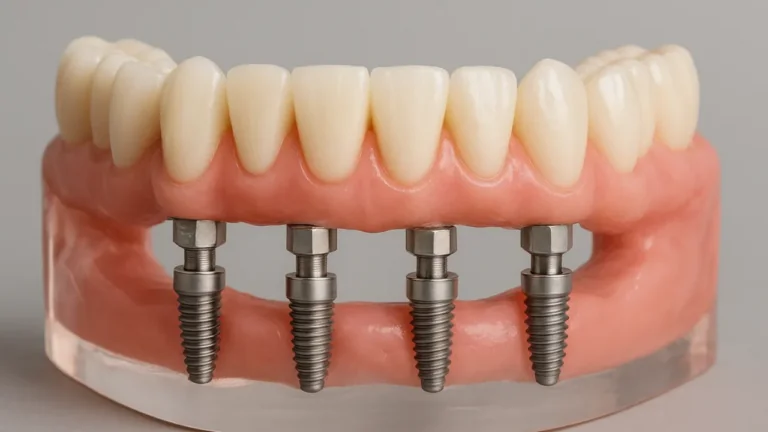
Implant plans are the usual case for this. The two-visit structure is set out before you book anything, which means the entry question for the second trip can be checked at the same time as the first.
Health Tourism and What It Does Not Change
Turkey has a formal health tourism framework, and clinics treating international patients hold an authorisation under it. Patients frequently assume this creates a separate entry route, and for short elective visits it generally does not.
You enter under the ordinary rules for your nationality. Having a treatment appointment does not exempt you from a visa requirement, extend a stay period, or change what your passport has to satisfy.
What the framework does affect is the clinic side — licensing, standards for clinics treating international patients, and the documentation the clinic maintains. That is worth knowing about for a different reason, since the authorisation is checkable.
Longer stays for extended medical treatment are a different matter and involve a different process. That is rarely relevant to dental treatment, which is measured in days rather than months.
If a clinic or an agency tells you that a treatment booking changes your entry position, treat that as a claim to verify rather than a fact. The official sources are the ones that decide it.
What it does change is worth knowing separately. Clinics holding the authorisation are operating under a defined framework, and asking to see it is one of the checks worth making — alongside the licence and the treating dentist's registration.
Documents Worth Carrying
Beyond the passport and any visa, a few things make the journey smoother and occasionally answer a question at the border. None is usually required and all are easy to have.
- Confirmation of your accommodation, or the address where you are staying.
- Your return or onward flight booking.
- Confirmation of your appointment from the clinic, with dates.
- Travel insurance details, if you have taken a policy.
- A written list of your medications, with the original packaging.
- Contact details for the clinic that answer out of hours.
The appointment confirmation is the one specific to this kind of trip. It explains the purpose of the visit in a sentence and it is trivial for the clinic to provide — ask for it when the appointment is booked rather than the week before.
The medication list belongs in hand luggage with the medication itself. Anything you take regularly should travel with you rather than in the hold, and original packaging removes any question about what it is.
Where implants were placed on a previous visit, bring those records too. The implant passport and your radiographs belong with you rather than in storage, and a second trip is the obvious moment to have them to hand.
If You Are Refused or Delayed
Uncommon, and worth having a plan for rather than improvising, because the practical consequence is a treatment schedule rather than only a journey.
Tell the clinic immediately. Appointments can be rescheduled and a laboratory sequence can be adjusted, but only if someone knows in time — a clinic learning at the appointment time has already lost the day.
Where the problem is a document, resolve it properly rather than attempting the journey again on the same basis. A refusal recorded against you is worth avoiding, and the same refusal will happen twice.
Where the problem is a flight rather than a document, the position is easier. Transfers are arranged against flight numbers so a delay is tracked, and the arrangements move with it rather than being missed.
Build a day of margin into the schedule where you can. It absorbs most of this category of problem and it costs one night, which is considerably less than a re-planned treatment sequence.
Travelling With Medication
A separate question from entry requirements and one that genuinely catches people, particularly for medications that are unremarkable at home.
Some medications ordinary in one country are controlled in another, and the list is not intuitive. Strong painkillers, some sleep medications and some stimulants are the usual categories, and the rules are published by your own government.
Carry them in original packaging with the pharmacy label, in hand luggage, with a copy of the prescription or a letter from your doctor for anything unusual. That removes almost every question before it is asked.
Tell the clinic what you take before you travel rather than on the day. It affects the treatment plan as much as the journey, and the medical history is where that belongs.
Anticoagulants deserve a specific mention. Never adjust them for a trip on your own initiative — that decision belongs to the doctor who prescribed them, and most dental treatment proceeds without stopping them at all.
Where sedation is planned, the medication question sharpens. Anything acting on the central nervous system interacts with sedatives and changes the dose or the choice, which is a safety matter rather than an administrative one.
Companions and Family
Frequently overlooked and occasionally expensive, because the assumption that a family travels under one set of rules is wrong more often than people expect.
Requirements follow each traveller's nationality and passport. A family with two nationalities can face two different requirements on the same trip, and the one who did not check is the one refused boarding.
Children have their own documents and occasionally their own requirements, including consent documentation where a child travels with one parent. That varies by country and is published by your own government.
Where a companion is coming specifically because sedation is planned, that matters practically — deeper sedation requires someone to accompany you afterwards, and a companion refused boarding changes the treatment.
Check each traveller separately, at the same time, before booking anyone's flights. It takes the same two minutes per person and it prevents the most avoidable problem in this whole area.
Where a companion is coming for a long treatment plan, their trip is worth planning with the same care as yours. Travelling alone is entirely workable, and bringing someone is a decision to make deliberately rather than by default in either direction.
What We Can and Cannot Help With
Stated plainly, because clinics are sometimes vague about this and the vagueness is not in the patient's interest.
We can provide written confirmation of your appointment, with dates and the treatment planned, on clinic letterhead. That is useful to carry and it is provided on request without difficulty.
We can confirm accommodation arrangements where we have made them, and provide the address and dates in writing. That covers the accommodation question if it is asked at the border.
We cannot advise on your entry requirements, and any clinic that does is overstepping. Immigration rules are not a clinical matter, they change, and the consequences of wrong advice fall entirely on you.
What we will do is tell you to check, and tell you where. That is the honest limit of what a clinic knows about this, and treating it as anything more is how patients end up stranded at a departure gate.
Planning Order
A sequence that avoids most of the problems on this page, and it costs nothing except doing things in the right order.
- Establish the treatment plan and how many visits it needs.
- Check your entry category and passport validity on the official sources.
- Check the same for anyone travelling with you, separately.
- Resolve any document issue before booking anything.
- Book flights around the treatment plan, with a day of margin.
- Apply for any electronic visa, on the official site, well before travel.
- Request the appointment confirmation letter from the clinic.
- Check again before a second trip, if the plan needs one.
Steps two and three before step five is the whole discipline. Booking first and checking afterwards is how non-refundable flights meet an insufficient passport, and it is entirely avoidable.
Step eight matters for implant plans specifically. Months pass between visits, documents expire and rules change, and the second trip deserves the same check as the first — the practical arrival guide covers what follows once you are through.
Where the plan involves gum treatment, allow for its own interval in the sequence. Re-evaluation happens weeks after the active phase, which is what turns some one-trip plans into two-trip ones and adds a second entry to check.