














What the Treatment Involves
Root canal treatment removes the nerve and blood supply from inside a tooth, cleans and shapes the canal system, and seals it. The tooth remains in place and functional; what is removed is the tissue that has become infected or irreversibly inflamed.
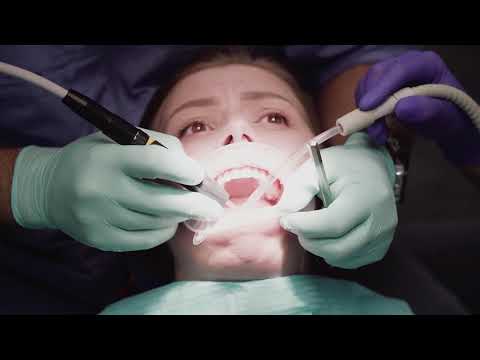
The work is done through a small access opening in the biting surface. Files clean and shape each canal, irrigating solutions dissolve remaining tissue and disinfect, and the space is filled with a sealing material. The access cavity is then restored.
The difficulty — and therefore the cost — lies in the canal anatomy. Canals are narrow, often curved, sometimes branched, and occasionally there are more of them than expected. Finding and cleaning every one is what determines whether the treatment succeeds.
This is why the same procedure name covers such different amounts of work. It is also why magnification and good imaging matter: a missed canal is the commonest reason a root canal fails and needs redoing.
It is worth distinguishing this from a filling. A filling replaces missing tooth structure; root canal treatment removes infected tissue from inside the root. A tooth can need both, and frequently does — which is one reason the distinction between the two is worth understanding before comparing any quotes.
One consequence worth knowing: a root-treated tooth has no nerve, so it will never again warn you about decay through sensitivity. That silence is why crowned and root-treated teeth need the same routine examination as any others, and why decay at the margin is usually found by a dentist rather than felt by the patient.
The Number of Canals
This is the largest single factor in cost, and it is determined by which tooth is involved rather than by anything the patient chooses.
| Tooth | Typical canals | Relative difficulty |
|---|---|---|
| Upper front tooth | 1 | Lowest |
| Lower front tooth | 1, sometimes 2 | Low |
| Premolar | 1–2 | Moderate |
| Lower molar | 3, sometimes 4 | High |
| Upper molar | 3–4, sometimes 5 | Highest |
A front tooth with a single straight canal can often be completed in one appointment. An upper molar with four canals, one of which is frequently hidden and difficult to locate, is a substantially longer procedure requiring more instruments and more time under magnification.
This is the first thing to check in any quote: does it specify the tooth, or is it a single figure for "root canal"? A generic price usually means either the simplest case or an average that will be adjusted upwards after examination.
First Treatment or Retreatment
Retreating a tooth that has already had root canal treatment is a different and more demanding procedure, and it costs accordingly.
The existing filling material must first be removed from every canal without damaging the root. Where a post has been cemented into the canal to support a crown, that has to come out too — a delicate step with a real risk of fracturing the root.
Only then does the actual retreatment begin, and it usually involves finding whatever was missed the first time. That is frequently an additional canal, a blocked canal, or an area that was not cleaned to the full length.
Success rates for retreatment are good but lower than for first-time treatment. Where retreatment is not feasible, the alternatives are surgery to treat the root tip from outside, or extraction and replacement.
There is a third option where retreatment through the crown is not feasible: apical surgery, in which the root tip is treated from outside through a small incision in the gum. It is used when a post cannot be safely removed or when retreatment has already failed, and it avoids losing the tooth in a proportion of otherwise hopeless cases.
Infection Changes the Plan
A tooth with an established infection at the root tip is treated differently from one where the nerve is inflamed but not yet infected, and the difference affects both cost and the number of visits.
Where infection is present, the canals are often dressed with an antibacterial medicament and left sealed for a period before the final filling. That means at least two appointments separated by days or weeks, sometimes more.
A large infection may also need drainage, and occasionally antibiotics — though antibiotics alone never resolve a root infection, because they do not reach inside a canal with no blood supply. They manage spread, not cause.
For patients travelling this matters practically. A straightforward case fits into a short trip; an infected molar may need a course of treatment across a week or require a return visit. It is worth establishing which before booking, as trip planning depends on it.
Where infection has been present a long time it will also have destroyed bone around the root tip. That usually heals once the source is removed, but where the defect is large it is worth reassessing on a radiograph months later — and if the tooth is eventually lost, that healed bone determines whether grafting will be needed before an implant.
The Crown Afterwards
This is the cost most often left out of comparisons, and it is not optional on a back tooth.
A root-treated tooth has lost the structure that braced its cusps, and no longer signals when it is overloaded. The access cavity also removes structure from the middle of the biting surface, which is exactly the material that held the walls together. Without a crown to bind it, the tooth is likely to split — and a split root-treated tooth is usually unrestorable.
Front teeth are sometimes an exception. Where the access cavity is small and the tooth is otherwise intact, a bonded restoration may be sufficient. This is a judgement made case by case rather than a rule.
The practical implication is that a quote for root canal treatment alone is not comparable with one that includes the crown. When comparing prices between clinics or countries, the relevant figure is the total for a restored tooth.
A related cost that is often omitted is the core build-up. Where much of the crown has been lost to decay, the remaining tooth has to be rebuilt with composite before a crown can be made — and sometimes a post cemented into the canal to retain it. Ask whether the quote includes this, because on a badly broken tooth it is not optional.
Equipment and Technique
Several elements of how the treatment is performed affect both cost and outcome, and they are worth understanding because they are rarely itemised.
- Magnification. An operating microscope makes locating hidden canals substantially more reliable. It is the single biggest technical factor in success rates.
- 3D imaging. A small-volume scan shows canal anatomy that a standard radiograph cannot, and reveals additional canals or unusual curvature before treatment rather than during.
- Rotary instrumentation. Nickel-titanium files shape curved canals more predictably and faster than hand files.
- Rubber dam. Isolating the tooth prevents saliva contaminating the canal during treatment. It is considered essential practice and its absence is a reasonable thing to ask about.
- Irrigation protocol. Mechanical cleaning reaches a limited proportion of canal surface; the rest is done chemically. Time spent on irrigation is time that does not look like anything but matters considerably.
None of these is visible to the patient, which is exactly why they get omitted where price is the selling point. The one you can reasonably verify is the rubber dam — it is a visible sheet isolating the tooth, and its absence during treatment is worth noticing.
What a Complete Quote Includes
Comparing quotes is only meaningful if they cover the same work. A quote for root canal treatment should specify all of the following.
- Which tooth, and therefore how many canals are expected.
- Whether this is a first treatment or a retreatment.
- The number of appointments anticipated.
- Whether a post and core build-up is included if needed.
- Whether the final crown is included, and in which material.
- What happens if the tooth turns out to be unrestorable once opened.
- What is covered if the treatment fails.
That last two matter more than they appear. Occasionally a tooth is found to be cracked below the gum once the crown is removed, at which point it cannot be saved. Knowing in advance what happens then — and what has been paid for — prevents a difficult conversation at a bad moment.
The same principle applies to any quote for restorative work. A figure that covers part of a treatment is not comparable with one that covers all of it, and the difference tends to appear at the point where you have already travelled. What to check before choosing a clinic covers this more broadly.
Why the Cheapest Quote Is Rarely the Comparison
Price differences between clinics for the same tooth usually reflect real differences in what is being done, and they are worth understanding rather than assuming.
A shorter appointment means less time on irrigation and shaping. Working without magnification means a higher chance of missing a canal. Omitting the crown leaves a brittle tooth that may fracture within a year. Each of these reduces the price and increases the chance of needing the work redone.
The relevant comparison is the cost of a tooth that is still functioning in ten years, not the cost of the procedure. A retreatment plus a crown plus the original treatment costs considerably more than doing it thoroughly once.
This applies equally in every country and is not an argument for any particular clinic. It is an argument for asking what is included rather than comparing headline figures.
There is a related trap in the other direction. An unusually high quote is not evidence of quality either. What distinguishes good treatment is what is actually done — magnification, isolation, adequate irrigation time, and a properly sealed restoration afterwards — and those are things to ask about rather than infer from price.
When Extraction Is the Better Value
Root canal treatment is not always the right answer, and a clinic that says so is being honest rather than unhelpful.
Where the tooth is badly broken down with little structure above the gum, restoring it may require a post, a core build-up and a crown — after which the long-term outlook is still uncertain. Where the root is fractured, treatment is not possible at all.
In those situations extraction and planned replacement is frequently the better use of money, because it produces a predictable result rather than an expensive attempt at an unpredictable one.
The counter-argument is real too: a natural tooth root maintains bone in a way no restoration does, and saving a tooth that has a reasonable outlook is almost always preferable. The judgement depends on how much sound tooth remains, and that is assessed rather than guessed.
Where extraction is chosen, ask about socket preservation at the same appointment. Grafting the socket immediately costs one extra step and frequently saves a much larger reconstruction later, which changes the total cost of replacement considerably.
Where the tooth is a molar and neighbouring teeth are sound, the replacement decision usually comes down to an implant or a bridge. Where several teeth in the area are already compromised, the planning question is broader and worth answering once for the whole quadrant rather than tooth by tooth.
How Long It Lasts
Well-executed root canal treatment on a restorable tooth has a good long-term outlook, with published success rates high over many years.
When it fails, the usual causes are a missed canal, incomplete cleaning, a leaking restoration allowing bacteria back in, or a fracture. The first two are technique-related; the third is about what is placed on top afterwards; the fourth is often related to grinding and an unprotected bite.
The coronal seal — the restoration covering the access cavity — is more important to long-term success than most patients realise. A perfect root filling under a leaking temporary will fail, because bacteria re-enter from above.
This is why the crown is not a separate cosmetic decision but part of the treatment, and why delaying it after the root canal is finished is a false economy.
Gum health matters here too. A root-treated tooth with progressive periodontal disease around it will eventually be lost regardless of how well the root canal was done, because the support beneath it is disappearing. Treating one without the other is incomplete.
Getting an Estimate Before You Travel
For international patients, establishing the likely scope before booking is genuinely useful, and it requires very little.
A recent panoramic radiograph and, ideally, a periapical view of the tooth in question shows the canal anatomy, whether there is an infection at the root tip, whether the tooth has been treated before, and how much sound structure remains.
From that we can say whether the case looks straightforward or complex, how many appointments are likely, whether a crown will be needed, and roughly how many days to allow. That is considerably more useful than a price for an unexamined tooth.
What we cannot do is guarantee it. Occasionally a tooth reveals an additional canal or a crack only once opened. Any honest estimate is conditional on examination, and a clinic that guarantees a figure sight unseen is promising something it cannot know.
Most dentists will provide copies of your radiographs on request, and you are entitled to them. A photograph of the image on a screen is usually adequate for a preliminary opinion, though the original file is better where fine detail matters.
Root Treatment as Part of a Turkish Trip
Root treatment is rarely why anybody flies to İstanbul, and it is very often on the plan once the radiographs have been read. A tooth being prepared for a crown turns out to have a dying pulp; an old restoration has decay beneath it that has reached the nerve; a tooth quietly discoloured for years is non-vital. This is ordinary, and a plan that includes it is a plan written after looking rather than before.
It is also the item most likely to be missing from a package quote, for exactly that reason — a package priced per crown has no line for what is under the crown. When the need is discovered on the day, in a clinic that quoted a fixed figure from photographs, the conversation that follows is the one patients remember badly. Ours are quoted from radiographs at the consultation, and where a root cannot be assessed without opening the tooth, the plan says so rather than the invoice.
The genuinely time-critical version is worth knowing about before you travel. A tooth with an active abscess is not left to be dealt with at home; it is drained and treated here, and it is why we ask about pain at booking rather than at arrival. İstanbul makes that straightforward in a way home practice often does not — a same-day emergency slot is a scheduling question rather than a two-week wait.
Root treatment is one of the few procedures where being unhurried is measurable in the result. Locating every canal, shaping without transporting them and sealing to the apex takes the time it takes, and a molar with four canals is not a forty-minute appointment. What follows matters as much: a root-treated back tooth needs cusp coverage rather than a plain filling, and the two are planned together rather than sequentially.
How Root Treatment Is Carried Out Here
Assessment establishes which tooth, how many canals are likely, whether it has been treated before, and whether there is infection at the root tip. Those four answers determine the scope, the number of visits and what the treatment will involve.
Where a tooth is not restorable, we say so before starting rather than after opening it. Spending on a treatment unlikely to hold is worse than the honest conversation about replacement options.
We quote the restored tooth rather than the procedure, because the crown on a back tooth is part of the treatment rather than an addition to it. A figure that excludes it is not a useful comparison with anything.
Our clinic has treated patients from more than thirty countries over twelve years. All treatments carry a lifetime guarantee, subject to attending the recommended check-ups and following the aftercare given, and excluding accidental damage or neglect. For root-treated teeth that specifically includes having the definitive restoration placed rather than leaving a temporary in place, since a leaking temporary is the commonest route to failure.