






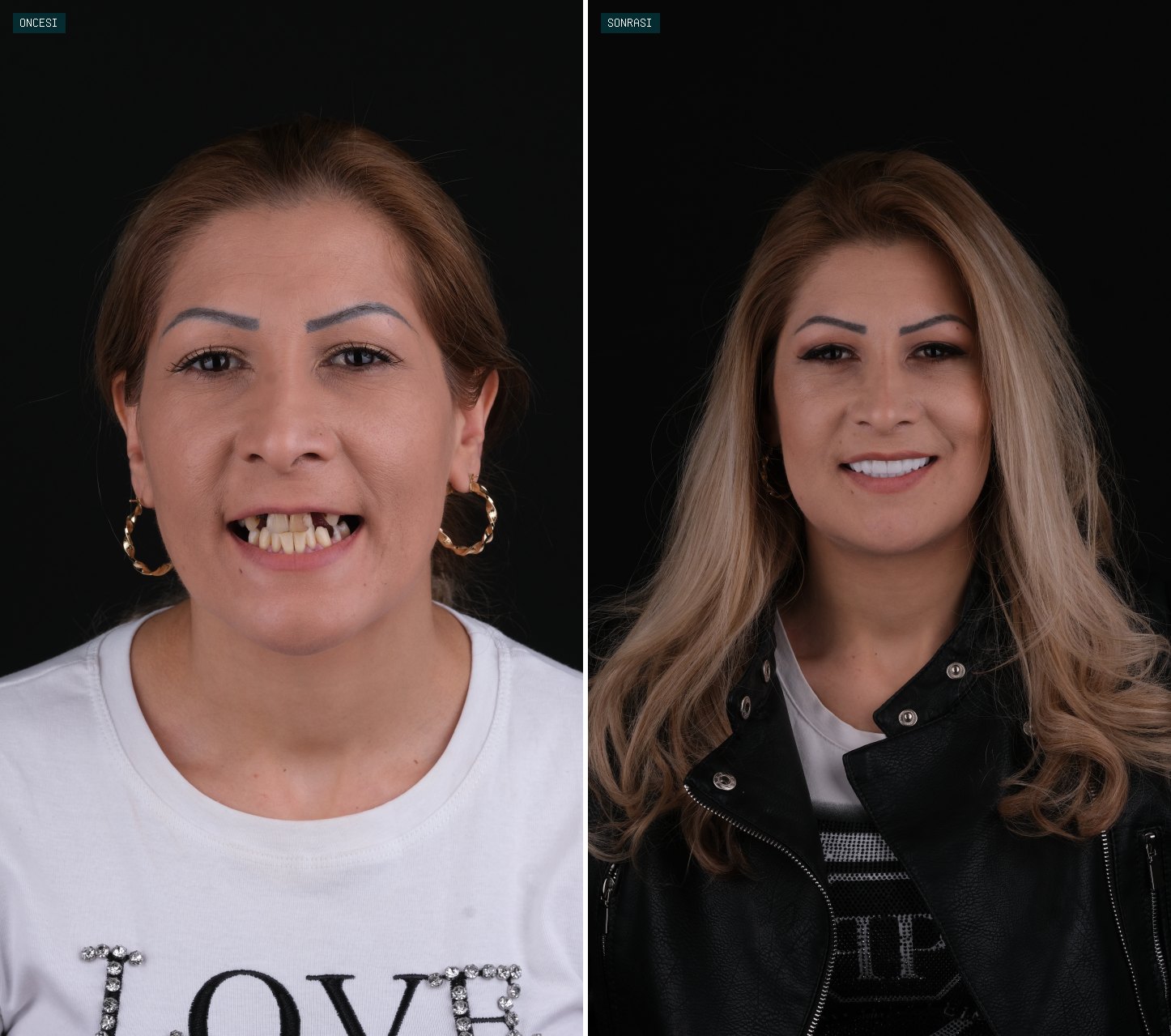

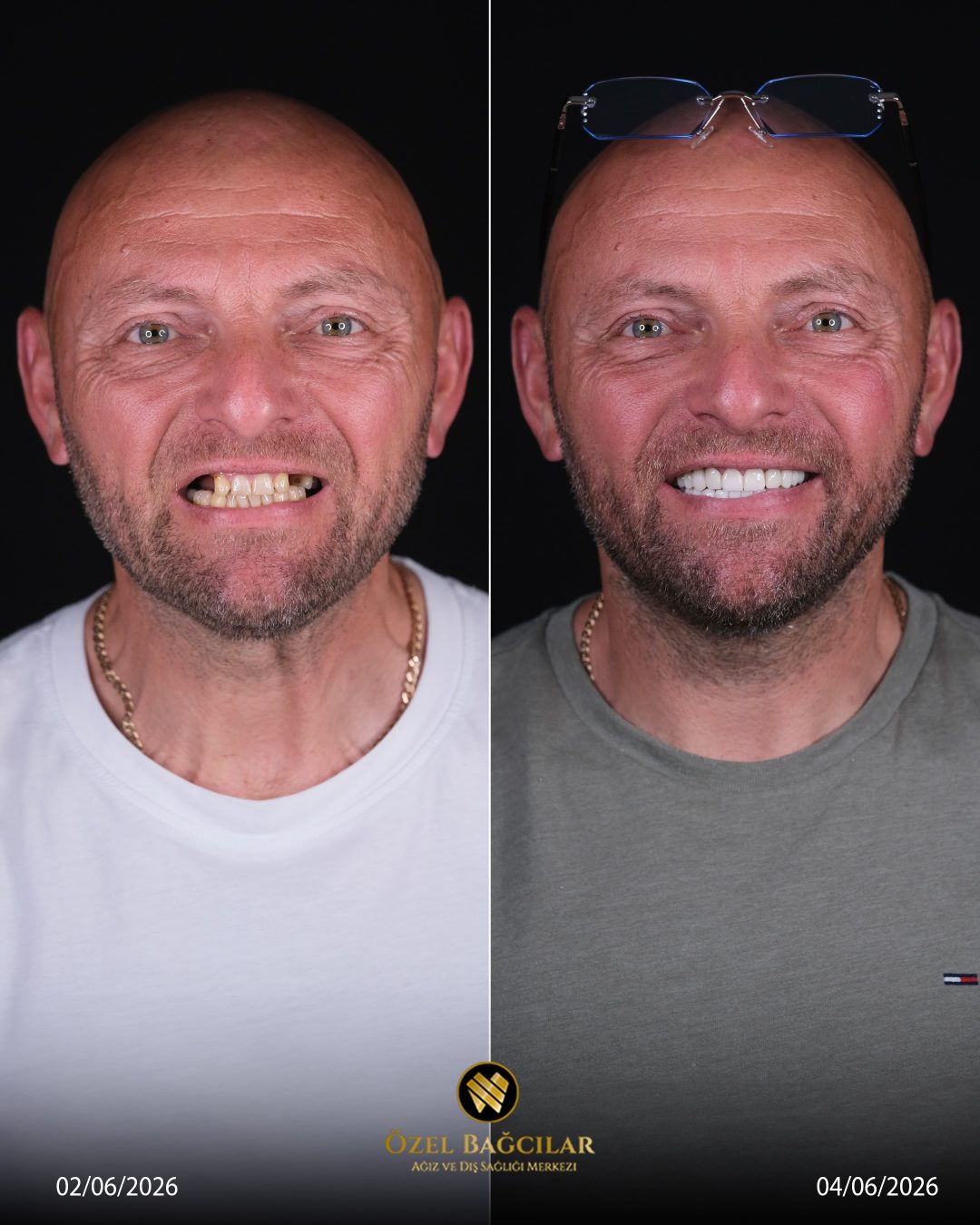
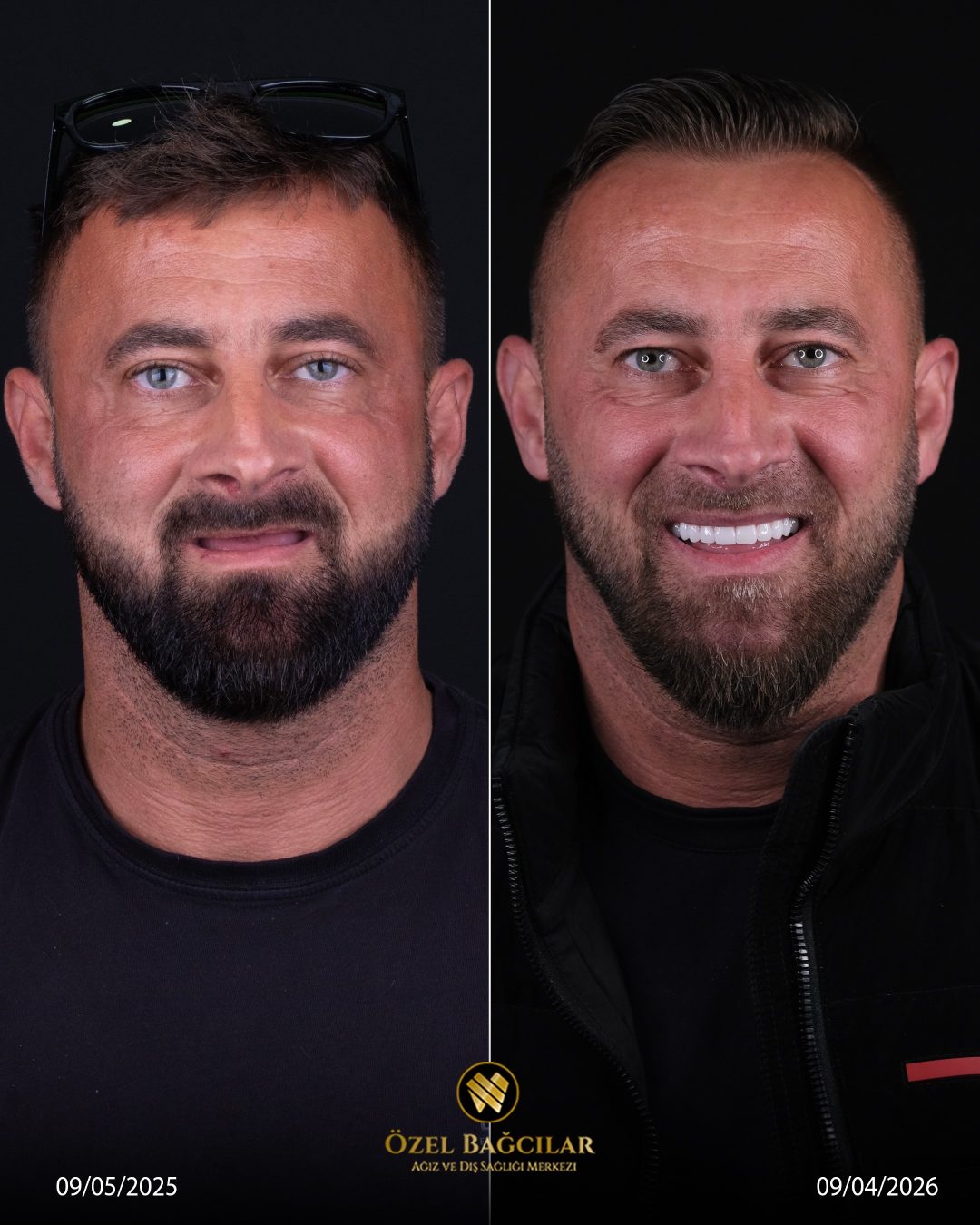




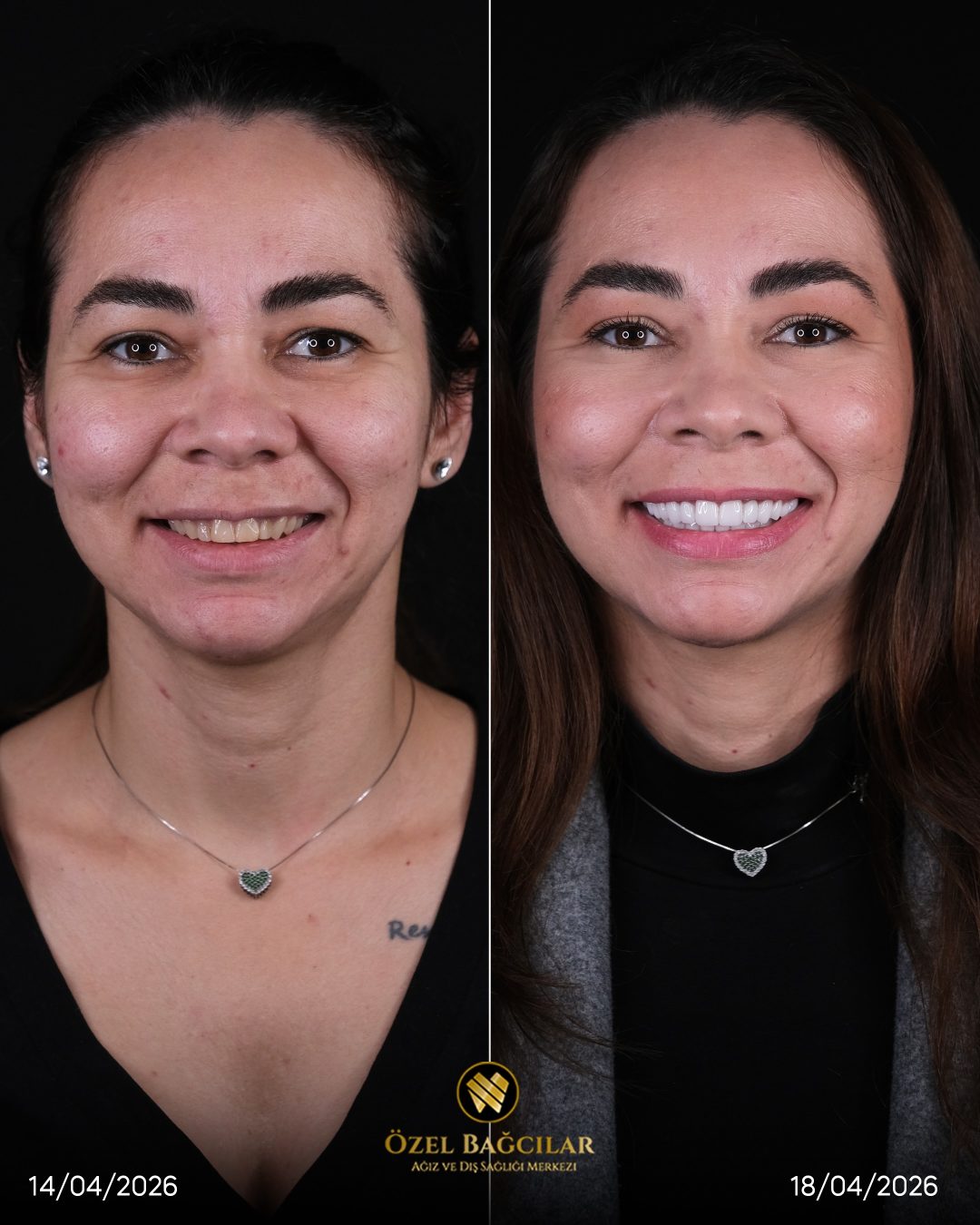

Two Different Solutions to the Same Problem
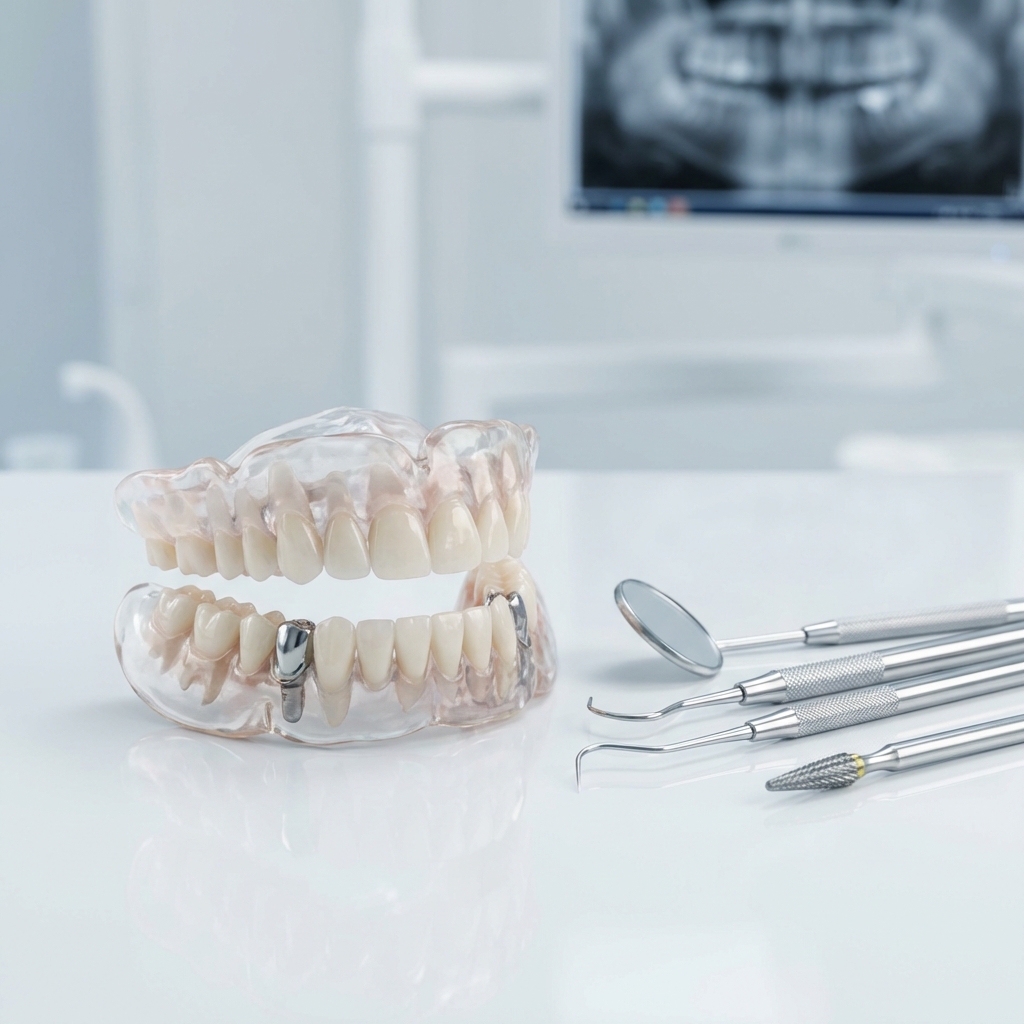
A denture is a removable appliance that sits on the gum and is held by suction, by the shape of the ridge, and — for partial dentures — by clasps around remaining teeth. Nothing is attached to the jaw. It is taken out for cleaning and usually overnight.
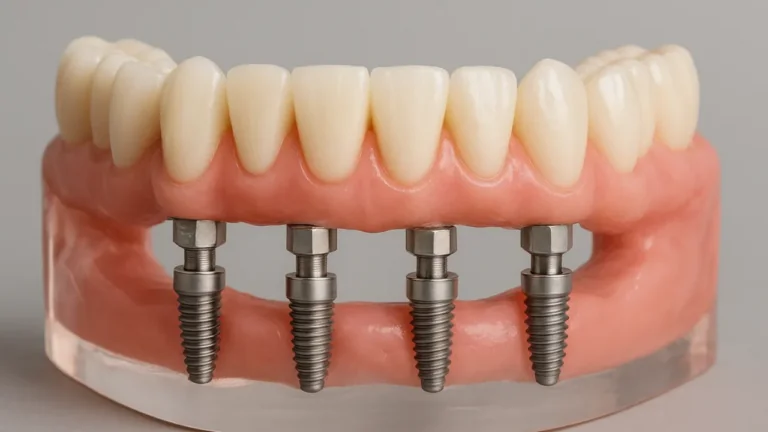
Implant treatment places titanium fixtures into the jawbone, where bone grows onto them over several months. Teeth are then attached to those fixtures. Nothing rests on the gum, nothing is removable by the patient, and nothing relies on suction.
Those are not two versions of the same thing. One replaces the crowns of the teeth; the other replaces the roots as well, and the roots are what the jaw responds to.
Everything in this comparison follows from that structural difference — chewing force, comfort, speech, how the fit changes over time, and what happens to the bone and the face. The full range of replacements sets both alongside the other options.
What a Denture Actually Is
A complete denture replaces a whole arch and is held mainly by suction against the gum. Uppers generally hold better than lowers, because the palate provides a large surface for suction to work against. Lower complete dentures are held by a horseshoe of ridge and are the harder of the two by a wide margin.
A partial denture replaces some teeth and clasps onto the remaining ones. It is more stable than a complete denture because it has teeth to hold onto, but those clasps place load on the teeth carrying them, which is a long-term consideration for those teeth.
Modern dentures are considerably better than their reputation. Made well, from good materials, with the bite properly set and the shape of the flanges supporting the lip correctly, they look natural and function reasonably.
What no denture can do is stop the bone underneath from resorbing, and that is the limitation everything else follows from — how dentures are quoted sets out what a well-made one involves.
What Implant Treatment Actually Is
The fixture is placed into bone and left to integrate, typically for three to six months. During that period bone grows onto the titanium surface, producing a connection that transmits chewing force into the jaw in the same way a root does.
Once integrated, teeth are attached. For a single missing tooth that is one crown. For a full arch it is a fixed bridge carried on four to eight implants — how the number is decided comes from a CT scan rather than a preference.
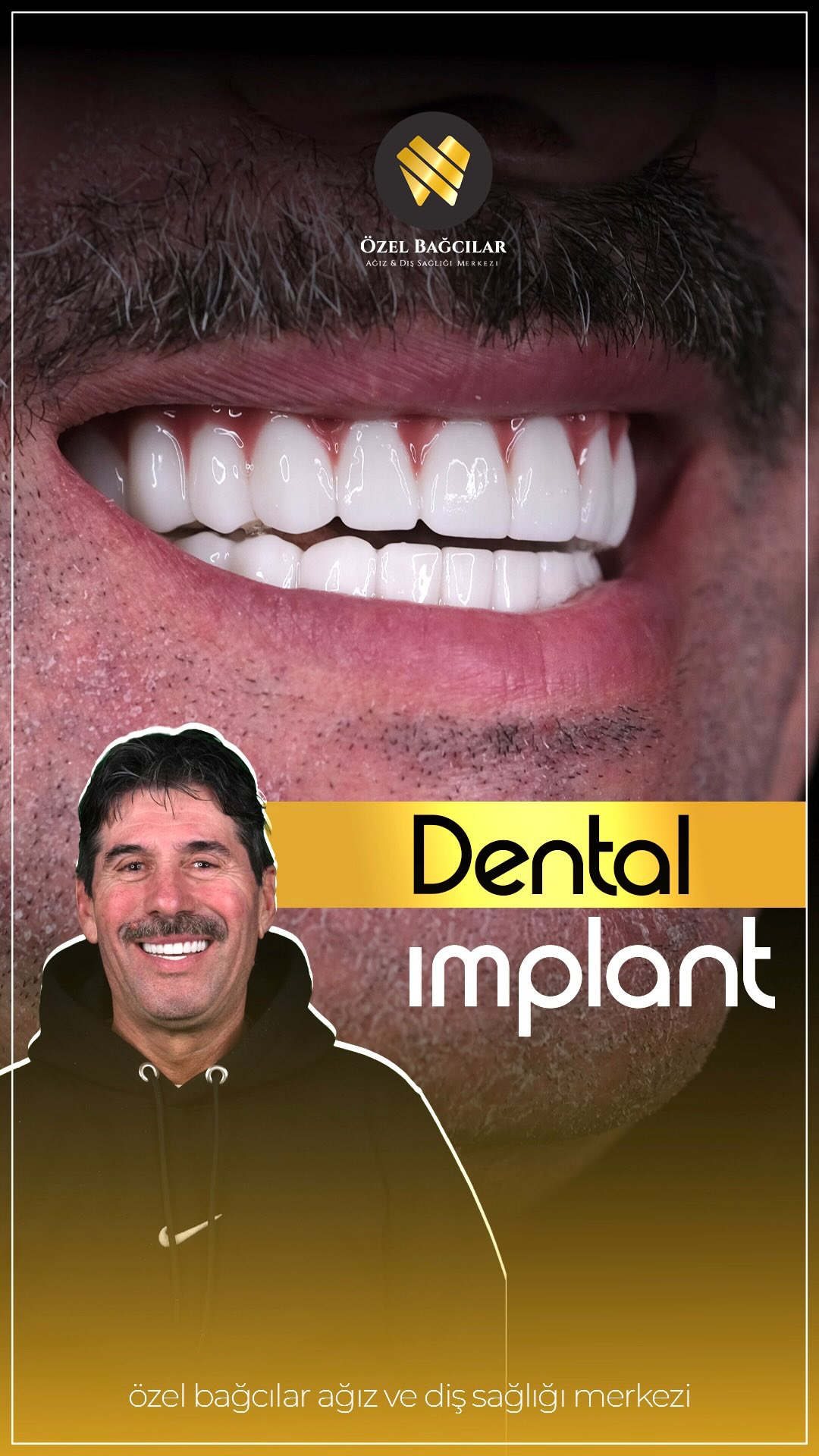
The result is fixed. It is cleaned in the mouth like natural teeth, it does not come out, and it does not rely on suction or on clasps. Chewing force is close to natural, which is the difference patients notice first.
The requirements are real though: enough bone, healthy gums, a healing period, and more than one visit. Where bone is short, grafting comes first and lengthens the treatment.
The Bone Question
This is the difference that compounds, and it is the reason the comparison looks different at year one and year ten.
Bone exists to support teeth. When a tooth is lost the bone that held it begins to resorb, quickly at first and then more slowly but continuously. A denture resting on that ridge does nothing to slow the process, and by transmitting chewing pressure onto the gum it can accelerate it.
The consequences accumulate. The ridge flattens, so the denture loses the shape it was holding onto and becomes looser. It is relined, and then relined again. The lower face shortens, the chin comes forward slightly, and the lines around the mouth deepen.
An implant loads the bone where it sits and preserves it there. That is not a cosmetic claim — it is why a patient with implants placed at fifty has a different jaw shape at seventy than one who has worn a complete denture for the same period.
Implants and Dentures Compared, Line by Line
The table sets out the practical differences. The rows are ordered roughly by how much patients say each matters once they have lived with both.
| Complete denture | Implant-supported teeth | |
|---|---|---|
| Held by | Suction and ridge shape | Integrated titanium fixtures |
| Removable | Yes, daily | No |
| Chewing efficiency | Substantially reduced | Close to natural teeth |
| Bone under it | Continues to resorb | Preserved where implants sit |
| Palate covered (upper) | Usually yes | No |
| Effect on taste | Reduced by palatal coverage | None |
| Fit over time | Loosens; needs relining and remaking | Stable |
| Time to complete | Weeks | Months, across two visits |
| Initial cost | Lower | Higher |
| Cost over decades | Repeated relines and remakes | Maintenance rather than replacement |
No row here says a denture is a bad treatment. What the table shows is that the gap widens with time, which is why age and expected horizon belong in the decision.
Chewing, and What You Can Actually Eat
This is the difference patients report most immediately. A complete denture delivers a fraction of natural chewing force, because pushing harder simply pushes the denture into the gum. The limit is discomfort rather than strength.
In practice that means avoiding certain things: apples bitten directly, tough meat, crusty bread, nuts, and anything sticky. Many long-term denture wearers have adjusted their diet so gradually that they no longer notice how much has gone from it.
Implant-supported teeth transmit force into bone, so the limit is much closer to that of natural teeth. Patients who switch describe eating things they had stopped thinking about rather than things they had been missing.
There is a nutritional dimension that is easy to overlook. A diet that has quietly narrowed to soft food over a decade is a real health consideration, and it is one of the stronger arguments for implants in an older patient rather than against them.
Speech, Taste and the Palate
An upper complete denture covers the palate, because that is where much of its suction comes from. That coverage has two effects patients are rarely warned about in advance.
The first is taste. A great deal of the temperature and texture of food and temperature sensation comes from the palate, and covering it dulls both. Food is less enjoyable in a way that is difficult to describe until it happens and difficult to accept afterwards.
The second is speech. Most people adapt within weeks, but the adaptation is real and certain sounds are affected initially. A denture that has been relined several times or has become loose brings speech problems back.
Implant-supported upper teeth leave the palate open. Nothing covers it, taste is unaffected, and speech is unchanged from the outset. For patients who have worn an upper denture, this is frequently the change they mention first.
A horseshoe-shaped upper denture that leaves the palate partly open exists and helps with taste, but it holds far less well because it has less surface for suction. It is usually only practical where implants provide the retention that the palate would otherwise have had to.
Comfort, Fit and Relining
A new complete denture is made to fit the ridge as it is on the day it is made. Because the ridge continues to resorb, the fit begins deteriorating from that day onward — slowly, but without stopping.
Relining rebuilds the fitting surface to match the changed ridge, and it is a normal part of denture ownership rather than a sign that something went wrong. It is needed periodically, and eventually the denture is remade entirely.
Between relines, a loosening denture causes sore spots, movement while eating, and for lowers in particular, real instability. Adhesives manage the symptom and do not address the cause.
Implants do not have this cycle. The fit does not change because nothing is resting on a shrinking surface. Maintenance is cleaning and periodic professional review rather than periodic refitting — what that maintenance involves is straightforward but not optional.
Sore spots in the first weeks of a new denture are normal and are adjusted rather than endured. Persistent soreness in a denture that has been worn for years is a different signal — it usually means the fit has moved far enough that relining is overdue, and adhesive is masking it. Any ulcer, sore spot or lump that has not healed within two to three weeks must be examined rather than adjusted again — that is a rule with no exceptions.
The Middle Option Most Patients Are Never Offered
Between a conventional denture and a full fixed bridge sits the implant-retained overdenture, and for a great many patients it is the best value of the three. It deserves to be part of every conversation about lower dentures in particular.
Two implants are placed in the lower jaw, and the denture clips onto them. It is still removable and still a denture, but it no longer moves while eating and no longer needs to be held in place by the tongue. For a patient struggling with a lower complete denture, the difference is transformative.
It requires far less bone and far fewer implants than a fixed arch, which makes it possible in mouths where a fixed bridge is not, and it costs a fraction of one. Cleaning is easier than with a fixed bridge because the denture comes out.
Four implants and a bar give still more stability where bone allows. How overdentures work in practice sets out both configurations and who each suits.
Cost Over Time Rather Than at Placement
Dentures cost considerably less to make. That is real and it is often the deciding factor, particularly where treatment is needed quickly. The comparison changes shape over a longer horizon.
A denture is relined periodically and remade at intervals as the ridge changes, and each remake is a full new appliance. Across twenty or thirty years those costs recur, and they recur more frequently as resorption progresses.
Implant treatment costs a great deal more once and then, in a maintained mouth, is not routinely replaced. Maintenance is hygiene appointments and occasional component servicing rather than remaking the restoration.
The honest summary is that implants are usually cheaper over decades and more expensive over a few years, and which matters depends on the patient. How a full-arch quote is built sets the figures out line by line so the two can be compared properly.
The overdenture sits between the two financially as well as clinically. Two implants and a clip-fit denture cost a fraction of a fixed arch while removing most of the instability, which is why it is often the best value of the three rather than a compromise between them.
When Dentures Are the Right Answer
There are genuine cases, and a clinic that never recommends a denture is not assessing patients individually.
- Where bone is severely reduced and the patient does not want grafting or a longer treatment.
- Where general health makes surgery inadvisable, or medication contraindicates implants.
- Where a patient smokes heavily and is not stopping — implant failure rates rise substantially.
- Where the immediate need is teeth now, with implants considered later.
- Where the cost of implants would genuinely not be recovered over the expected horizon.
- Where a patient simply does not want surgery, which is a legitimate position and not one to argue with.
In several of these, an overdenture on two implants bridges the gap — less surgery, less bone required, much of the stability. It is worth asking about even where a fixed arch has been ruled out.
Certain medical situations rule implants out more firmly, including some bone medications, change the assessment considerably rather than automatically ruling implants out and recent head or neck radiotherapy. Those are determined at the consultation from your medical history rather than at the treatment stage.
Where a single tooth or a short span is missing rather than a whole arch, a partial denture is rarely the best of the available answers. An implant or a bridge both give something fixed, and a removable appliance for one or two teeth is usually a temporary measure rather than a plan.
Switching From Dentures to Implants
Very common, and the main variable is how long the denture has been worn. Years of resorption reduce the bone available, which is why the answer to "can I have implants" changes over time — and why asking sooner gives more options.
A CT scan settles it. Where there is enough bone, treatment proceeds normally. Where there is not, grafting or a sinus procedure may make it possible, and in severely reduced upper jaws zygomatic implants avoid grafting by anchoring in the cheekbone.
Your existing denture usually continues in use during treatment, adjusted so it does not press on healing implant sites. Nobody is left without teeth while integration happens.
Patients who make this switch consistently report the same three things: eating without thinking about it, tasting food properly again where an upper denture covered the palate, and not being aware of the teeth at all.
Where teeth still remain and are failing, the sequence needs planning rather than improvising. How extractions are staged matters here: a socket preservation graft placed at the time of removal keeps bone that would otherwise be lost, and it is far cheaper than rebuilding it later.
Which Route We Recommend, and Why
From the CT scan, the gum assessment and your medical history — and from what you actually want, which is a legitimate input rather than a preference to be overridden.
Where implants are possible we say so and explain what they involve honestly, including the healing period and the second visit. Where they are not, or where the balance genuinely favours something else, we say that too rather than proposing the larger treatment by default.
The overdenture option is always discussed for lower arches, because it is the one most often left out and the one that solves the most common complaint. Two implants and a clip-fit denture change more for a struggling lower denture wearer than any amount of remaking will.
Whatever is placed carries a lifetime guarantee on materials and workmanship, in writing — with the exclusions stated plainly, including what applies to dentures, which are relined as a matter of maintenance rather than repaired as a fault.