












The Three Options, Honestly
For one missing tooth between two neighbours there are three real choices, and a clinic that presents only one has not assessed anything.
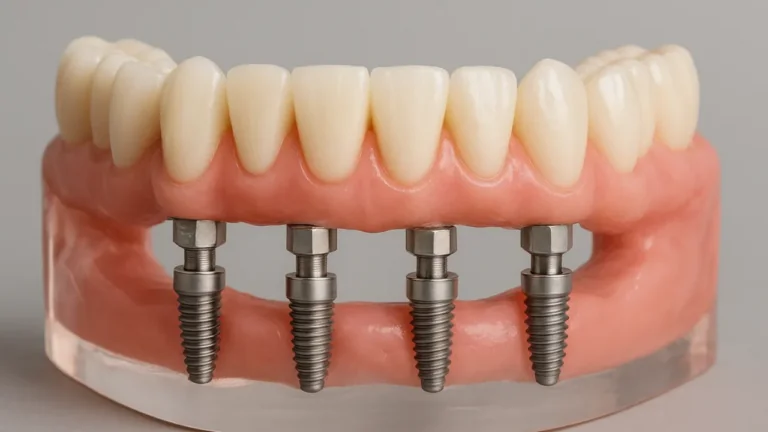
An implant replaces the root. It stands alone, keeps the bone under the gap loaded, and leaves the neighbouring teeth completely untouched. It takes months and it costs the most at placement.
A bridge borrows support from the neighbours. It is faster — about a week — and it costs less at placement. It also requires cutting both neighbouring teeth down all the way around, permanently, and it does nothing for the bone.
Leaving the space is the third option and it is legitimate in some positions. It costs nothing today. What it costs later depends entirely on where the tooth was and what the opposing tooth does.
Which is right depends on the neighbours, the bone, your age and the position — the full comparison goes through it case by case, including the situations where a bridge is genuinely the better answer.
What Drives the Figure for One Tooth
Six things, and the spread between a simple case and a complex one for the same missing tooth is considerable.
Whether the tooth is still there. An implant placed into a healed site is one treatment; one requiring extraction first is another, with its own timeline and usually a socket preservation graft at the same appointment.
How long it has been missing. Bone resorbs after tooth loss, fastest in the first months. A space that has been empty for years frequently needs grafting before an implant is possible, and that is a separate procedure with its own healing period.
Where it is. An upper back tooth sits under the sinus, which after tooth loss expands downward — a sinus lift is common there and it is the line most often absent from a low quote for upper molars.
The implant system, the abutment type and the crown material make up the rest. Those are choices rather than findings, and they should be named in writing before you agree to anything.
The Quote for One Tooth
Four parts as a minimum, and a single figure that seems unusually low almost always means one of them is missing.
| Component | What it is | Commonly omitted? |
|---|---|---|
| Surgery | Placing the fixture, with anaesthesia and follow-up | No |
| Implant fixture | The titanium root replacement, by system | No |
| Healing abutment | Shapes the gum during integration | Sometimes |
| Final abutment | Connects fixture to crown; stock or custom | Frequently |
| Crown | The visible tooth, by material | Frequently |
| Extraction | Where the tooth is still present | Sometimes |
| Socket preservation | Graft at extraction to keep the ridge | Often |
| Bone graft or sinus lift | Where volume is short | Often |
Ask for those lines separately. A clinic that has planned properly already has them itemised internally, so producing them takes no effort — and reluctance is the more informative answer.
The implant system belongs on that list too, named rather than described. Which system was used determines whether a component can be obtained in fifteen years, and for a single tooth that is the only line whose consequence is invisible for a decade.
Over Twenty-Five Years
This is where the ordering reverses, and it is the argument most patients are never given because it is harder to put on a price list.
An implant in a maintained mouth is not routinely replaced. The fixture is expected to last; the crown on top may need remaking once over a long period, and that is a smaller job than the original.
A bridge typically serves well past a decade — around nine in ten are still in place at ten years and roughly three-quarters at fifteen — but unlike an implant it is expected to be remade at some point, and each remake tends to be larger than the last. When it fails, the abutment teeth underneath have usually deteriorated — decay at the margins, or a root fracture in a tooth carrying three teeth' worth of load — so the replacement is larger than the original.
That escalation is the real cost. A three-unit bridge remade twice over thirty years is three treatments, and by the third the abutment teeth may not be restorable at all. At that point the answer is implants anyway, from a worse starting position.
None of which makes a bridge wrong. It makes the comparison a question about your age and horizon, and that is the conversation worth having rather than a comparison of two figures today.
The Cost of Leaving It
Doing nothing is a real option and it should be priced honestly rather than dismissed. It is also not free, and the costs arrive slowly enough to be easy to ignore.
The teeth either side tilt into the space over years. That changes the contact points, creates food traps that are difficult to clean, and complicates whatever is eventually placed there.
The opposing tooth over-erupts into the gap, because nothing is meeting it. That changes the bite and, once it has moved significantly, means the opposing tooth needs treatment too before the space can be restored.
The bone under the space resorbs continuously. A gap left for ten years frequently cannot take an implant without grafting, so the option that was free has made the eventual treatment larger and more expensive.
There are positions where none of this matters much — a last molar with no opposing tooth, for instance. Elsewhere, the full range of replacements sets out what each situation actually calls for.
Where a Bridge Is Genuinely the Better Answer
It exists more often than implant marketing suggests, and it turns on the state of the neighbouring teeth.
Where both neighbours already carry large fillings, crowns or root treatments, the argument against cutting them down largely disappears. They are already restored teeth, and using them as abutments costs little that has not already been spent.
Where they need crowning anyway, a bridge becomes the efficient choice — three units instead of two crowns and an implant, in one visit rather than across months.
Where medical circumstances make surgery inadvisable, or where a patient does not want surgery, a bridge is a legitimate answer rather than a compromise. That last is a decision to respect rather than argue with.
And where speed genuinely matters — a wedding, a job, a deadline — a bridge delivers a fixed tooth in about a week where an implant takes months. That is a real difference and it is occasionally the deciding one.
One more case: where the neighbouring teeth need crowns anyway for their own reasons. Two crowns and an implant is more work and more cost than three connected units, and the biological argument against preparing them has already been settled by their condition.
Immediate Placement and What It Saves
Where the tooth is still present, one decision at the extraction appointment affects both the timeline and the total.
Placing the implant at the same appointment as the extraction saves a healing cycle — months, and one surgical visit. It often gives a better gum contour at the front, where that is visible — though it does not by itself stop the outer plate of bone from resorbing, which is why the gap around an immediate implant is normally grafted at the same appointment.
It requires no active infection, enough intact bone around the socket to hold the implant stably, and healthy gum tissue. Those are assessed on a CT beforehand and confirmed once the tooth is actually out.
Where the conditions are not met, forcing it produces a badly positioned implant, which is a far worse outcome than waiting — the criteria are measured rather than promised.
Where immediate placement is not possible, socket preservation grafting at the extraction is the next best thing, and it is far cheaper than rebuilding bone two years later.
The Crown on Top
Half the finished tooth, and the part most often left out of a headline figure for a single implant.
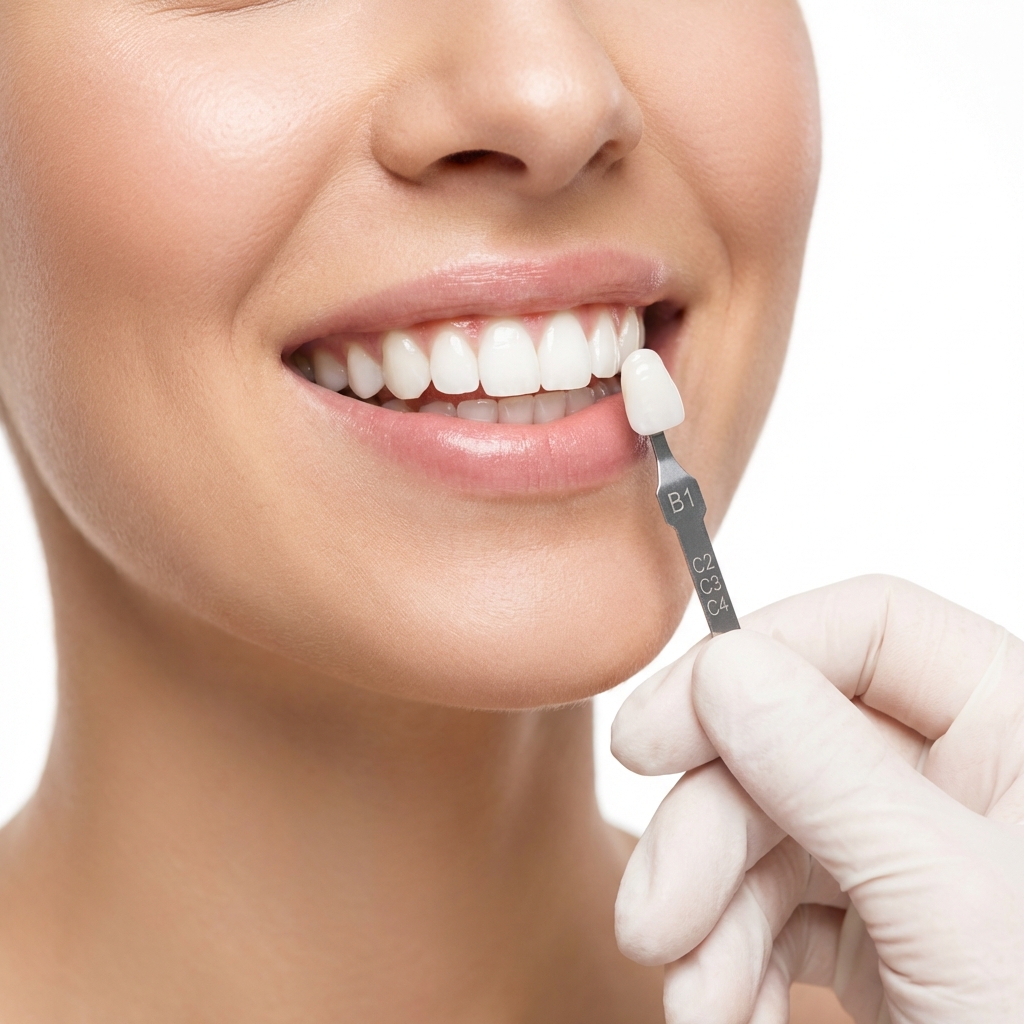
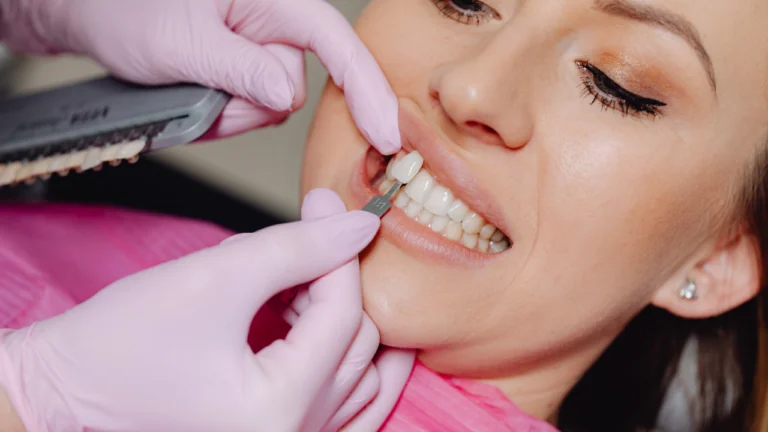
Material is chosen by position. A back tooth carries heavy load and appearance matters less, so monolithic zirconia is usually right. A front tooth needs translucency, and the material choice changes accordingly.
The abutment underneath matters more on front teeth than most patients realise. A custom abutment milled to your gum contour produces a better emergence profile — the crown appearing to come out of the gum the way a tooth does — than a stock one.
Screw-retained or cemented is a further choice, and it affects the long term rather than the appearance. A screw-retained crown can be removed for servicing without being destroyed, which is worth having on something meant to last decades.
All three should be named in the quote — which ceramic and why is a decision with a right answer for your particular tooth rather than a default applied across a plan.
Why Two Quotes for One Tooth Differ
Assume both clinics are honest. There are still four legitimate reasons the figures diverge, and separating them from the illegitimate ones is the whole task.
- A different implant system — the largest and most defensible difference.
- A different crown material or a custom rather than stock abutment.
- Different preparatory work: one has planned grafting and the other has not.
- One includes the crown and the other quotes the surgical phase only.
The illegitimate versions look similar from outside: the abutment omitted, grafting that will be needed left off, an unnamed implant system, or a quote for the fixture alone presented as a finished tooth.
Laying both against the component table above resolves it in a few minutes. Where one has fewer lines, ask why, and a clinic with a genuine reason gives it immediately.
The wider implant cost breakdown applies to each fixture in any plan, and the reasoning is the same whether there is one implant or eight.
Travel Costs for One Tooth
The honest arithmetic, and it is the reason a single tooth is the weakest case for travelling.
Implant treatment for one tooth still needs two visits, because integration takes three to six months regardless of how many implants are involved. Two visits means two sets of flights and two absences from work.
For a patient in Europe with short cheap flights, that may still work comfortably. For a patient travelling from further away, the travel can approach or exceed the saving on a single tooth.
What changes it is combining treatments. One implant alongside crowns, gum treatment or whitening in the same visits spreads the fixed cost of the journey across a much larger piece of work.
So the question worth asking is not whether one implant justifies a trip, but what else is on your treatment list — a full assessment frequently finds more than the tooth you came about.
The exception is a front tooth. There the result matters enough, and the work is specialised enough, that patients travel for a single unit more often than the arithmetic alone would suggest — and the design considerations are the same whether one tooth is involved or eight.
Front Teeth Cost More, and Why
Not because clinics charge differently by position, but because the work genuinely differs and the tolerance for imperfection is far smaller.
The gum contour around a front implant crown determines whether it reads as a tooth or as dental work. Achieving that frequently means a custom abutment, sometimes a soft-tissue graft, and more chair time shaping the tissue during healing.
The bone at the front is thinner on the outer surface, so it resorbs more visibly after extraction. Preserving it — immediate placement, or a graft at extraction — matters more here than anywhere else in the mouth.
The crown is harder to make. Matching a single front tooth to its natural neighbour is the most demanding thing a technician does, considerably harder than making ten teeth that only have to match each other.
None of that is optional if the result is to be invisible. It is worth understanding as the reason a single front implant is priced above a single back one rather than as an inconsistency.
What Maintenance Actually Costs
Small figures that decide whether the larger one was worth spending, and they are ongoing rather than one-off.
Cleaning at the margin, every day, with an interdental brush sized to the space. Implants do not decay, but the gum around them inflames and that causes bone loss — which is what ends implants far more often than anything mechanical.
Hygiene appointments at the interval you are given, which may be shorter than six months. That is normal ongoing care rather than a cost of the implant, and it is where early problems are caught.
A night guard where you grind, replaced as it wears. An implant has no ligament to cushion load the way a natural tooth does, so grinding transmits force straight into the bone around it.
Those three habits determine whether the implant lasts a decade or several. What actually causes implants to fail is overwhelmingly biological rather than mechanical, and all of it is preventable.
Gum health around the implant is the whole of it. Periodontal maintenance at a shortened interval is what prevents the inflammation that causes bone loss, and it costs a fraction of replacing a failed implant.
Is One Tooth Worth Travelling to İstanbul For?
It is a fair question and it deserves a straight answer rather than a sales one. For a single implant considered in isolation, the flights and the days off work are a real part of the total, and for some people they will decide it. Where travelling clearly does make sense is where the single tooth is not really single: a gap alongside two teeth that need crowning anyway, an old bridge that is failing, or a front tooth where the result depends on soft-tissue work and a laboratory that will iterate the shade rather than send whatever came back.
The second case for travelling is timetable rather than arithmetic. A single implant at home is typically four appointments spread over six to nine months, each one a day arranged around a practice diary. Here the surgical stage is one short visit, and the restorative stage is a second visit of a few days once integration is complete — and where the bone allows immediate loading, the temporary tooth goes on at the first appointment rather than months later.
İstanbul also removes a constraint people rarely anticipate at home: parts. An implant placed in Bağcılar is placed with a system whose components will still be available in a decade, and the make, the diameter and the batch go into an implant passport you leave with. Why that matters more than the brand name itself is set out separately, and it is the single most common reason an otherwise successful implant becomes unrestorable years later.
If, having read all of that, one tooth still does not justify the trip for you, that is a reasonable conclusion and we would rather you reached it before booking than after.
Whether the arithmetic works is largely a question of flight cost, and that is geography rather than dentistry. It works most often for readers in the UK, Ireland and Germany, where the journey is short and cheap. From North America a single tooth rarely justifies it on its own, and we will say so rather than encourage the booking.
How We Quote One Tooth
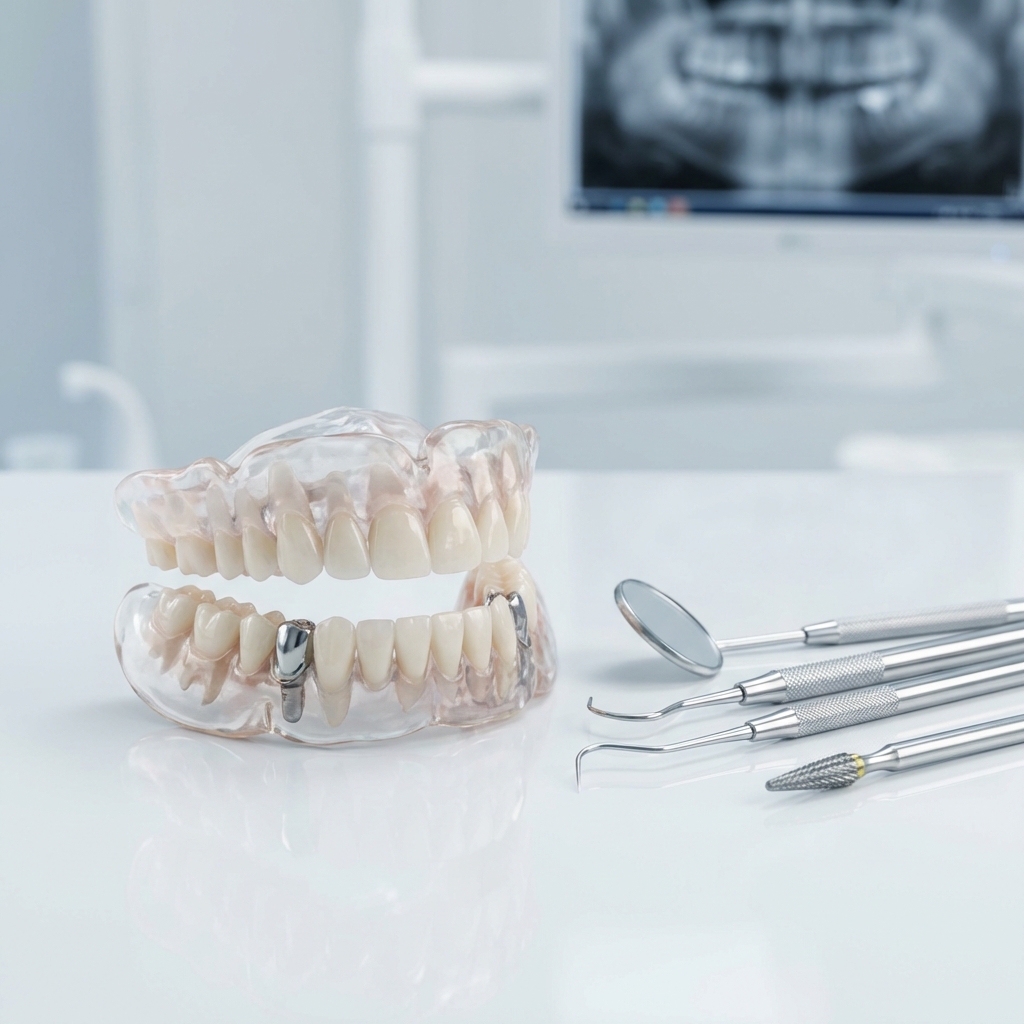
Imaging first. A panoramic radiograph and a CT scan before any figure, because bone width and the position of the nerve or the sinus determine whether this is a simple case or one needing preparation.
The quote lists every component separately — surgery, fixture, healing abutment, final abutment, crown — plus any extraction, grafting or sinus procedure with its own timeline.
The alternatives are set out alongside it. Where a bridge would be a reasonable answer for your particular neighbours, we say so and explain why, including when that is the cheaper option.
Where the neighbours are sound and unrestored, we say that too — because it is the single strongest argument against a bridge and it is the fact a patient is least able to check for themselves.
The figure does not change afterwards, and everything placed carries a lifetime guarantee on materials and workmanship — with the exclusions stated plainly rather than left to be discovered.