

Zirconia is strong, biocompatible and stain-resistant. It is also not the right answer for every tooth. A straight look at how it is made, where it excels and where another material wins.
Zirconium dioxide is a ceramic. In dentistry it arrives as a milled block, is shaped by a machine from a digital scan of your tooth, and is then fired at high temperature until it reaches its final hardness. That manufacturing route is the reason zirconia behaves the way it does — both its strengths and its limits come from it.
This article explains what the material actually is, the difference between the two ways it is used, which teeth it suits, and where a different choice makes more sense. If you are weighing crowns against veneers more broadly, our page on veneers and crowns compared covers that decision separately.
Monolithic or Layered: The Choice That Matters Most
A zirconia restoration is made in one of two ways, and this single decision affects appearance, strength and longevity more than anything else.
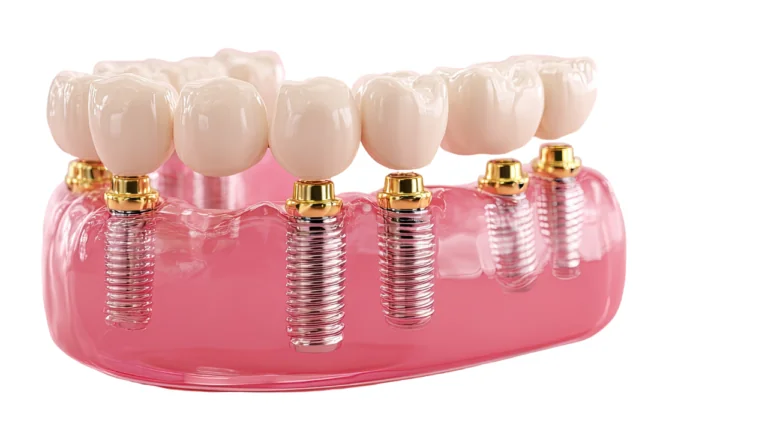
Monolithic zirconia is milled as a solid piece, with the colour built into the block and refined by staining the surface. There is no join anywhere in the restoration, so there is nothing to chip off. It is the tougher of the two and the obvious choice for molars, for anyone with a heavy bite, and for long-span bridges.
Layered zirconia uses a zirconia core with feldspathic porcelain built onto the front by hand. The porcelain layer is what gives front teeth their depth — the way light passes into the tooth and returns with slightly different colour at the edge than in the body. Nothing milled from a single block reproduces that quite as well. The trade-off is that the porcelain layer is softer than the core beneath it and can chip under heavy load.
In practice, many plans use both: layered zirconia where it shows, monolithic where it works. That is not a compromise, it is matching material to job.
How Zirconia Compares
| Situation | What tends to suit it |
|---|---|
| Molars, heavy chewing load | Monolithic zirconia |
| Front teeth, maximum translucency wanted | Layered zirconia or a glass ceramic |
| Long-span bridge | Zirconia, for framework strength |
| Minimal tooth reduction is the priority | Veneers rather than crowns |
| Dark underlying tooth or an old metal post | Zirconia, which blocks show-through |
| Known metal sensitivity | Zirconia, which contains no metal |
| Implant-supported crown at the front | Zirconia, for the gum tissue response |
The fifth row is worth pausing on. A tooth that has darkened after root canal treatment, or one carrying a metal post, will show through a thin translucent restoration as a grey shadow. Zirconia has enough opacity to stop that, which is one of the situations where it clearly outperforms more translucent ceramics.
The last row reflects how gum tissue responds. Zirconia holds a polished surface well and attracts less plaque than roughened surfaces do, which matters at the gum margin of a front crown where any inflammation is immediately visible.
What Happens to the Tooth Underneath
A crown requires the tooth to be reduced on all surfaces so the restoration has room without ending up bulky. That reduction is not reversible, and it is the main reason a crown should not be chosen when a veneer or a filling would do the job.
Where a crown is genuinely indicated — a tooth already heavily filled, a cracked tooth, a tooth after root canal treatment, or a bridge abutment — the reduction is not a loss. Those teeth need full coverage to survive, and covering them is what keeps them.
The distinction is one of the things we go through at the examination, with the tooth in front of us. It is a question that has a different answer for each tooth in the same mouth.
Getting the Colour Right
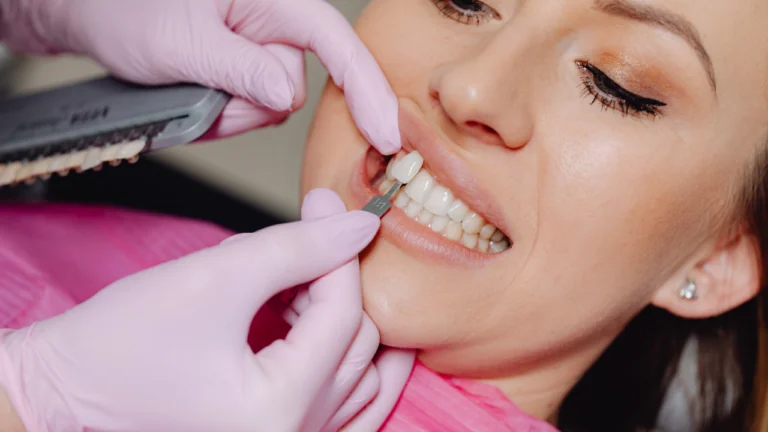
Colour matching is the part patients notice and the part that is hardest to do well. Natural teeth are not one colour: they are lighter and more opaque near the gum, more translucent and often slightly grey at the biting edge, with subtle internal characteristics in between.
Matching a single crown among natural teeth is the demanding case, because the crown must disappear next to something you cannot change. Matching a full set of front crowns is technically easier — the whole group is being made together — but the shade choice is then permanent for the whole smile, which is a different kind of decision.
This is why a try-in stage is worth the extra appointment. Restorations are checked in the mouth in daylight before they are cemented, and the shade is adjusted while adjusting it is still possible.
Care and What Shortens Their Life
Zirconia does not decay, but the tooth underneath it can, and it does so at the margin where crown meets tooth. That margin is the whole ballgame. Brushing along the gum line and cleaning between the teeth every day is what protects it.
Grinding is the other main threat, particularly to layered restorations. If you clench or grind, a night guard belongs in the plan from the start, not after the first chip.
Zirconia does not respond to whitening. If you are considering whitening your natural teeth, do it first and match the restorations to the result, because it cannot be done the other way round.
Guarantee and Cost
Everything we make is covered by our lifetime guarantee — the materials and the workmanship both. That guarantee is given by this clinic, directly to you. It is not a supplier promise handed down to you, and it carries no expiry date.
We do not publish price lists or quote over the phone. The number of teeth, the condition of each one, whether any need treating before restoration and which construction suits your bite all change what is involved. Those are things we can see, and we would rather show you than estimate.
The first examination is free. We are in Bagcilar, Istanbul, Monday to Saturday, 09:00 to 19:00. Come in and we will go through your teeth one by one and tell you which ones genuinely need crowning and which ones do not.