













Two Different Procedures, Not Two Grades of Turkish Veneer
The most useful correction to make at the start is that these are not the same treatment at two price points. They are different in method, in appointment structure, in how much tooth is involved and in how they behave over years.
Composite is a resin containing fine ceramic particles. It is applied to the tooth in layers, shaped by hand, and hardened with a light. The dentist is also the technician, and the entire result is created in the mouth in one sitting.
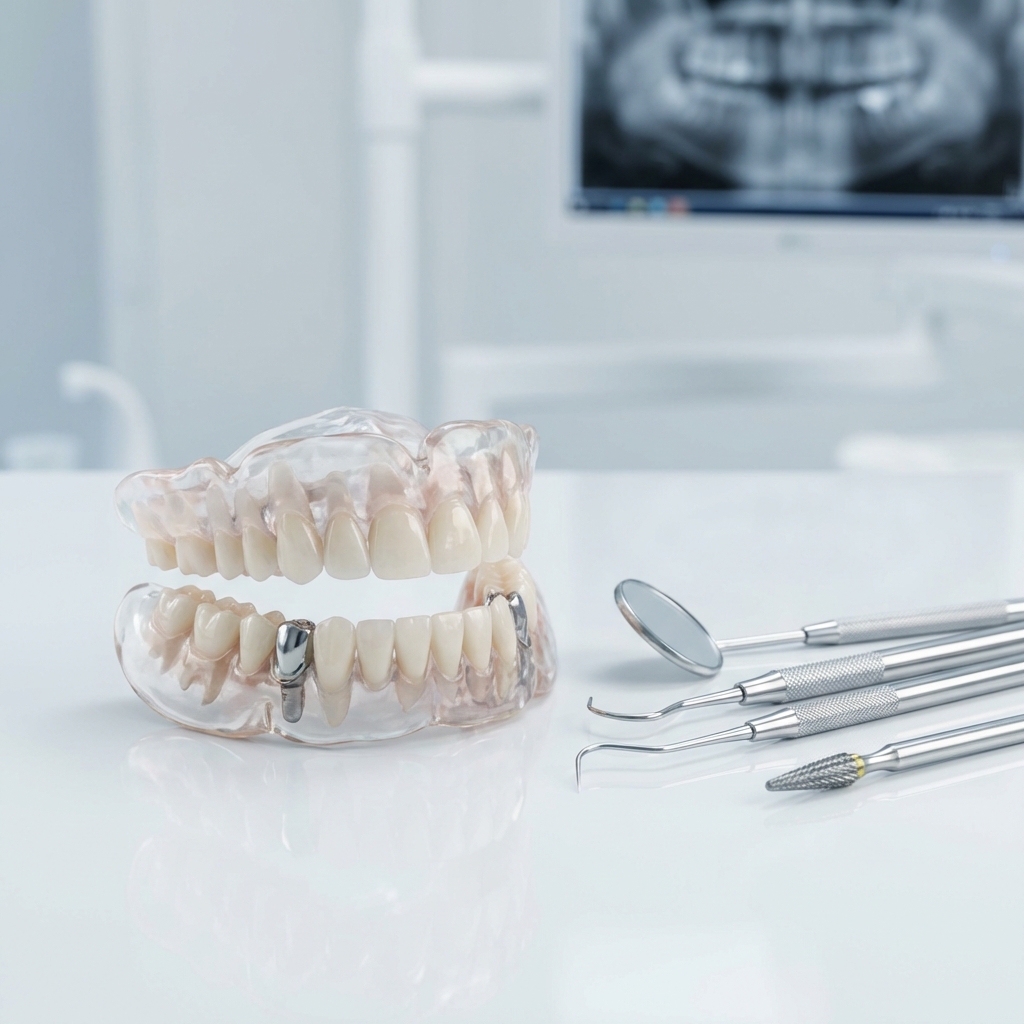
Porcelain is a fired ceramic made outside the mouth. An impression or scan is taken, a technician builds the restoration over several hours, and it is bonded at a later appointment. The dentist prepares and bonds; the technician decides what it looks like.
That division of labour is the root of most of the differences below. One process is fast, adjustable and hand-made at the chair; the other is slower, more precise, and made from a material that is fundamentally more stable.
How Composite Is Actually Placed
In many cases nothing is removed from the tooth at all. The surface is cleaned and etched, a bonding agent applied, and resin built up in layers of different shades and translucencies to reproduce the structure of a natural tooth.
Each layer is cured with light before the next is added. The final shape is sculpted with instruments, then contoured and polished — and polishing is where much of the quality lies, because surface texture determines how the material catches light and how quickly it picks up stain.
The whole process for a few teeth takes a single appointment, and you leave with the finished result. Nothing is temporary, and there is no second visit to schedule.
The skill requirement sits entirely with the dentist, in real time. There is no laboratory stage to correct a misjudgement, which is why results vary more between operators than porcelain does — and why a good composite result is a genuine indicator of a careful clinician.
How Porcelain Is Made and Fitted
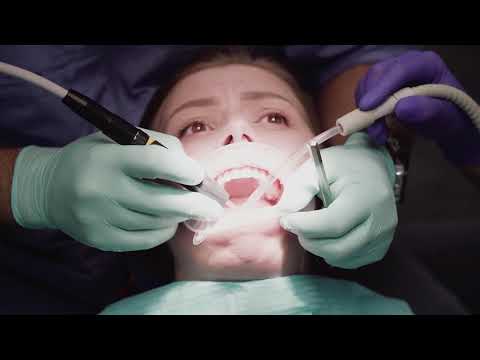
The tooth is prepared, typically by around half a millimetre on the front surface, ideally through an agreed mock-up so the reduction is measured against the final shape rather than the existing tooth.
A scan or impression goes to the laboratory, and temporaries are fitted to protect the prepared teeth and preview the shape. The technician builds the veneers — pressed, milled or layered by hand depending on the material and the case — over several days.
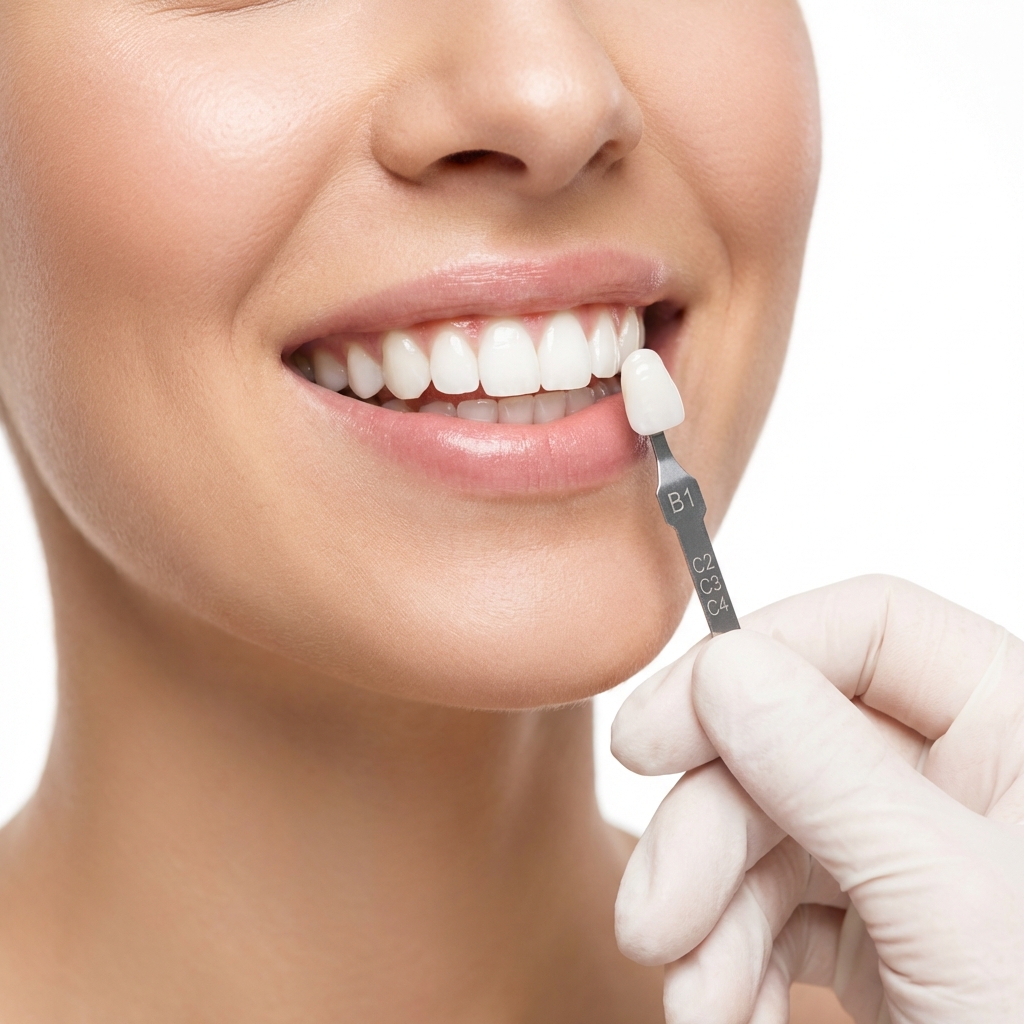
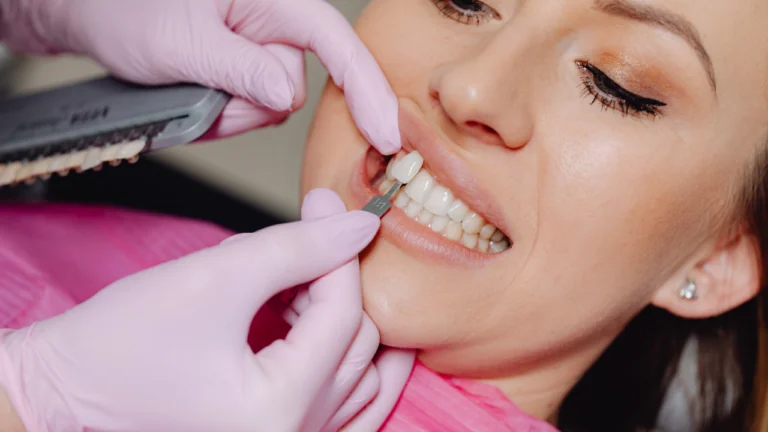
At the second appointment the veneers are tried in before bonding, usually with a try-in paste that simulates the final cement shade, so fit and appearance can be checked while changes are still easy. Then they are bonded, the bite adjusted and the margins polished.
The result is a material that is chemically stable, does not absorb pigment, and holds its surface for years. The trade is a second visit and irreversible preparation of the tooth.
Composite and Porcelain Compared, Line by Line
The table below sets out the practical differences. Read the tooth removal row and the repair row together — between them they explain most of the cases where composite is the better answer.
| Composite | Porcelain | |
|---|---|---|
| Made | In the mouth, by the dentist | In the laboratory, by a technician |
| Appointments | One | Two, with temporaries between |
| Tooth removed | Often none | Around 0.5 mm from the front surface |
| Staining | Absorbs pigment over time | Does not stain |
| Surface gloss | Dulls, and needs re-polishing | Stable for years |
| Chipping | More likely at edges | Less likely, but fractures rather than chips |
| Repair | Repaired directly in the mouth | Usually replaced |
| Typical service life | Shorter, refreshed periodically | Well beyond a decade |
| Reversibility | Genuine, where no preparation was done | Limited — enamel does not return |
No row in that table says one is better. Two of them favour composite quite strongly, and the reason it is so often presented as the lesser option is that it costs less to place, not that it does less.
Appearance: Where the Gap Actually Is
At placement, a skilfully layered composite can be extremely convincing. On one or two teeth, matched to natural neighbours, a good result is difficult to identify even at close range.
The gap opens over time rather than on day one. Porcelain is fired ceramic and does not absorb pigment; composite is a resin matrix and does. After two or three years of coffee, tea and red wine the difference is usually visible, particularly at the margins.
Surface gloss follows the same pattern. Porcelain holds a high polish indefinitely; composite dulls gradually and needs re-polishing to recover it. That is a straightforward appointment, but it is a recurring one.
For full-arch work porcelain also holds an advantage in consistency. Ten restorations made in a laboratory to one design match each other precisely; ten sculpted by hand across a long appointment are harder to keep identical. Where the design covers many teeth, that matters.
Staining, and What You Can Do About It
Composite staining is not uniform. It concentrates at the margins where the material meets the tooth, and in any microscopic surface roughness left by inadequate polishing. Well-polished composite stains far more slowly than poorly polished composite.
The main culprits are the obvious ones — coffee, tea, red wine, dark fruit — and smoking, which is considerably worse than any of them. The rate is individual, and someone who drinks little coffee may see very little change for years.
Surface staining is removed by professional polishing at a hygiene appointment. Deeper discolouration within the material is not, and at that point the composite is refreshed rather than cleaned.
One thing neither material tolerates is whitening after the fact. Neither composite nor porcelain lightens, so any whitening belongs before the shade is matched — and understanding why the teeth darkened sometimes removes the need for restoration entirely.
Habit changes help more than products do. Rinsing with water after coffee, tea or red wine, and keeping the polishing appointments you are given, slow the process considerably. Whitening toothpastes are abrasive and make it worse rather than better, because they roughen the surface that was holding the stain out.
Strength, Chipping and Repair
Porcelain is harder and more resistant to wear; composite is softer and somewhat more forgiving. Neither is strong enough to survive an unmanaged grinding habit, and that is the variable that matters most.
Composite chips at edges more readily, particularly on biting edges and where a thin margin has been left. The compensation is decisive: a chipped composite is repaired directly in the mouth in a single short appointment, usually invisibly.
Porcelain resists chipping better but fails differently. When it does fail it tends to fracture or debond, and repair is rarely satisfactory — the restoration is generally remade, which means the laboratory cycle again.
For anyone who grinds, a night guard is not optional with either material. Managing bruxism first is the difference between restorations that last and restorations that come back, whichever material is chosen.
Where the restoration sits matters as much as the material. A composite edge left thin on a biting surface will chip whatever the patient does; the same material in reasonable thickness on a front surface rarely does. Much of what is blamed on the material is really a design decision made at placement.
Tooth Removal: The Argument That Should Weigh Most
For a young patient with sound, unrestored teeth, this is the consideration that should dominate, and it is the one most often left out of the conversation.
Additive composite — placed with no preparation at all — leaves the tooth exactly as it was. If it is removed in ten years, the enamel underneath is intact. That is genuinely reversible, and nothing else in cosmetic dentistry is.
Porcelain requires preparation, and that enamel does not return. It is a modest amount and a well-planned preparation is conservative, but the tooth is permanently a restored tooth from that day.
For someone in their twenties deciding between the two, this often settles it. Composite now, with the option of porcelain in ten or fifteen years if wanted, keeps every door open. The reverse order closes one permanently.
Not every porcelain case removes the same amount either. Where the design brings teeth forward or lengthens them, preparation can be minimal; where teeth are being brought inward or shortened, it is greater. Preparing through an agreed mock-up is what keeps it to the minimum the design actually needs.
Lifespan and What Ends Each
Composite is not a temporary measure, and describing it that way is unfair to it. Well-placed composite lasts years, and it is maintained rather than replaced wholesale — polished, occasionally repaired, and eventually refreshed.
What ends it is cumulative: staining that polishing no longer removes, accumulated chips at the edges, and gradual loss of surface texture. The endpoint is a decision rather than a failure, and it is usually taken at a routine appointment.
Porcelain fails more abruptly and less often. It holds its appearance almost unchanged for well beyond a decade and then, if it fails at all, does so through fracture, debonding, or decay in the tooth underneath. What can be done when veneers fail covers both patterns.
Both carry a lifetime guarantee on materials and workmanship here, in writing. What no guarantee covers is the tooth beneath, gum disease, or grinding without the guard — the exclusions are stated plainly.
Cost Structure Over Time
Composite costs markedly less to place. There is no laboratory stage, no second appointment and no temporaries, and for a patient travelling that also means one visit instead of a longer trip.
The pattern afterwards differs though. Composite involves periodic re-polishing, occasional repairs and eventual refreshing — smaller amounts, more often. Porcelain involves nothing for a long period and then a larger cost if it needs replacing.
Over a long horizon the totals converge more than the placement figures suggest, and which is genuinely cheaper depends on how long you keep them and how heavily you stain. What is not in doubt is that composite is far less to commit to today.
How either quote is built, and what an incomplete one leaves out, is set out in the veneer cost breakdown. The number of teeth matters more to the total than the material does.
Number of teeth outweighs material either way. Four composite restorations and four porcelain ones are a far smaller decision than four against twenty, and the tooth count should come from what actually shows when you smile rather than from a package.
Which Suits Which Case
Reduced to practical rules, the pattern is reasonably clear, and most disagreements between clinicians are about the middle ground rather than the ends.
- One or two chipped or worn front teeth: composite, almost always.
- A single small gap between the front teeth: composite, with no preparation.
- A young patient with sound teeth wanting a modest change: composite.
- Six to ten teeth being redesigned together: porcelain, for consistency.
- Significant shade change across the smile: porcelain, which does not stain.
- Teeth already carrying large old fillings: porcelain, or crowns where structure is short.
- A heavy coffee drinker or smoker wanting stability: porcelain.
- Anyone unwilling to have enamel removed: composite, and that is a legitimate position.
Where the complaint is a single space, the options for closing it start with bonding rather than with veneers, and it is worth reading before committing to a larger plan.
Where a tooth has broken, the answer depends on how much is missing — what to do with a broken tooth sets out when bonding suffices and when it does not.
One rule cuts across all of them: whichever material is chosen, the foundation is dealt with first. Decay, failing old fillings and gum inflammation are addressed before anything decorative is placed, because restorations bonded onto an unstable foundation fail early regardless of what they are made of.
Combining the Two in One Plan
These are not mutually exclusive, and some of the better plans use both. Porcelain on the teeth that dominate the smile, composite on teeth at the edges that need only a small correction.
There is a second combination worth knowing: composite as a trial. Where a patient is unsure about a shape or a length, building it in composite first lets them live with it for months rather than an hour, and porcelain follows later if they are happy.
Composite also fills the waiting periods well. Where alignment is the right first step, small bonding corrections during or after treatment often remove the need for veneers altogether.
What does not work well is mixing the two on adjacent front teeth long term. They age differently, and after a few years the composite will have shifted in shade while the porcelain has not.
Sequencing them across trips works well for patients travelling. Composite corrections can be done in a short first visit while a porcelain plan is designed, so you leave with an improvement rather than a temporary and return when the laboratory work is ready.
Which Material We Recommend, and Why
By case rather than by default, and the amount of tooth that has to be removed carries the most weight. Where a result can be achieved additively, with no preparation, that is what we propose — including when it is the smaller treatment.
Age and the state of the teeth matter. For a patient in their twenties with sound unrestored teeth, composite keeps every option open. For a patient whose front teeth already carry large restorations, porcelain or crowns are the realistic answers and composite would be a short-lived compromise.
The design comes first either way. Shape and proportion are agreed on your own face before anything is placed, and where porcelain is planned, preparation is done through the approved mock-up so that no more enamel is removed than the design requires.
Our laboratory is in the building and the technician sees you in person for shade, which shortens the porcelain route considerably — how the visits are arranged sets out what each option needs in days.
The reason this choice matters more on a treatment trip than at home is that the cheaper option is the one clinics abroad are least likely to offer. Composite is done in a single appointment, needs no laboratory and generates no ceramic invoice, so it rarely appears in an İstanbul package. That is a commercial fact rather than a clinical one, and it works against exactly the patients who would do best on it — young patients, small defects, cases where preparing teeth would be the larger harm. If you are quoted porcelain for something composite could solve, ask why in those terms. A clinic in Bağcılar or anywhere else should be able to answer it about your teeth rather than about the material.