










The Four Categories
Almost every logo on a clinic website falls into one of four groups, and knowing which is which changes what it tells you.
Licences. Granted by a state authority after inspection, mandatory to operate, and withdrawable. A clinic licence is not a distinction — it is the minimum, and its absence would be disqualifying rather than its presence being impressive.
Accreditations. A voluntary assessment against a published standard, conducted by an independent body, with periodic reassessment. These mean something because the standard is public and the assessment is external.
Certifications. Usually of a management system rather than of clinical quality — quality management, information security, environmental management. Real, audited, and describing how the organisation runs rather than how good the dentistry is.
Memberships. An association joined by paying a subscription and meeting a basic eligibility bar. Frequently displayed alongside the other three in a way that invites confusion, and it tells you very little on its own.
The Baseline Every Turkish Clinic Must Meet
Two documents in Turkey, and they are the ones to ask for first because everything else is optional and these are not.
A Ministry of Health clinic licence. It covers the premises, the equipment, the sterilisation facilities and the staffing, and it is granted after inspection and subject to further inspection. Every legally operating clinic has one.
A health tourism authorisation, for clinics treating international patients. It sits on top of the clinic licence and applies specifically to serving patients who travel for treatment.
Both are documents rather than logos. A clinic can send you copies, and the ease with which that request is met is informative independently of the content.
Neither tells you the dentistry is good. They tell you the clinic is legal, inspected and permitted to do what it is doing — which is a floor rather than a recommendation, and a floor worth confirming.
Ask for both together rather than one at a time. A clinic that sends two documents in one reply has them to hand; one that sends the first and goes quiet about the second has answered a question you did not have to ask twice.
The Individual, Not Just the Clinic
A distinction that logos obscure entirely, and the one that matters most to your actual treatment.
A clinic licence covers the premises. It says nothing about the person who will be treating you, and a licensed clinic can employ clinicians of widely varying experience.
The individual credential is the registration. Every dentist in Turkey is licensed by the Ministry of Health after a five-year degree, and specialists hold a separate registration in oral surgery, periodontology, prosthodontics, orthodontics, paediatric dentistry or endodontics.
So the question is not whether the clinic has certificates but who is treating you and what registration they hold. That is a name and a number, and it is checkable.
It also exposes a common overstatement. "Specialist in implantology" is not a recognised speciality in most systems including this one — the specialities that actually exist are a defined list, and experience outside them is a different and legitimate claim.
It also determines who answers years later. A guarantee claim runs against the clinic, and the file runs to a named clinician — which is why the name belongs in your written plan rather than only in the room.
Reading a Wall of Logos
The practical exercise, and it takes a minute per logo once you know what to look for.
| What you see | What it usually is | What it tells you |
|---|---|---|
| Ministry of Health licence | A licence | The clinic is legal and inspected — the floor |
| Health tourism authorisation | A licence | Permitted to treat international patients |
| International accreditation body | An accreditation | Assessed against a published external standard |
| ISO number | A certification | A management system is audited — not clinical quality |
| Professional association logo | A membership | A subscription is paid; eligibility met |
| Manufacturer training logo | A course certificate | Someone attended training on a product |
| Award or ranking badge | Varies enormously | Check who awards it and on what basis |
The last row is where most of the noise is. Some awards are genuine peer or industry recognition; others are paid placements on directory sites, and the badge looks identical either way.
The test is the same for all of them: who issued it, on what basis, and can it be verified independently. A logo that fails all three is decoration.
One further category appears on some sites: patient review platform badges. Those are not credentials at all — how to read reviews properly covers what they represent, which is a rating rather than an assessment.
What Accreditation Genuinely Adds
Where a clinic does hold a real accreditation, it is worth understanding what that process involves rather than dismissing it along with the memberships.
An accreditation body publishes a standard covering clinical governance, patient safety, infection control, records management and staff competence. The standard is public, which means you can read what the clinic was assessed against.
Assessment is by external assessors visiting the clinic, examining records and observing practice. It is not a self-declaration, and it is repeated periodically rather than granted once.
What it demonstrates is systems rather than individual skill. A clinic that has documented processes for sterilisation, records, consent and complaints has shown something real about how it operates.
What it does not demonstrate is that the treatment proposed to you is appropriate. An accredited clinic can still over-treat, and the checks against that are entirely separate from any certificate.
It also creates a complaints route that exists outside the clinic. Where an accrediting body has a process for patient concerns, that is a genuine addition to what a licence alone provides — and it is worth asking whether one exists.
Sterilisation is the area where an external assessment is most useful, because it examines process rather than equipment. The verification steps are exactly the kind of thing an assessor checks and a patient cannot.
What ISO Certificates Actually Cover
Common on clinic websites, frequently misread, and worth explaining because the misreading is systematic.
The most commonly displayed ones certify management systems. A quality management certificate means the organisation has documented processes and follows them; an information security one means data handling is managed to a standard.
Those are real and audited. They are also about the organisation rather than about clinical outcomes, and a clinic with excellent documentation can still produce mediocre dentistry.
The information security one has become more relevant as clinics hold digital records, radiographs and photographs of patients. That is a genuine consideration and it is worth knowing it is what the certificate covers.
Read them as evidence of organisational seriousness rather than of clinical quality. That is what they are, and a clinic presenting them as the latter is overstating them.
There is a version worth asking about specifically where implants are involved. Records management standards govern how your radiographs, scans and implant details are stored, and those are the documents you will need in fifteen years.
Memberships and Why They Are Displayed
The largest category by volume and the least informative, and there is no dishonesty in displaying them provided they are not presented as something else.
Professional associations exist for legitimate reasons — continuing education, professional community, advocacy. Membership indicates a clinician is engaged with their profession, which is mildly positive.
It does not indicate assessment. Most associations require a qualification and a subscription, and nobody visits the clinic. That is not a criticism of the association; it is simply what membership means.
The problem arises when memberships are displayed in a grid alongside licences and accreditations with no distinction, which invites the reader to weight them equally.
Where you see a grid, ask which are licences, which are accreditations and which are memberships. A clinic that answers immediately is comfortable with the distinction; one that does not has been relying on the blur.
Continuing education is the one area where membership does carry weight. Associations requiring documented ongoing training are asking something of their members, and that is a different claim from one requiring only a subscription.
Manufacturer Training Certificates
A specific category worth separating out, because it is genuinely informative and frequently overstated at the same time.
Implant manufacturers run training programmes on their own systems, and a certificate shows a clinician has completed one. That is real and it matters — system-specific technique varies and training on the system being used is relevant.
What it does not indicate is a speciality, a qualification or independent assessment. It indicates attendance at a course run by the company selling the product.
It also tells you something useful in passing: which systems the clinic actually works with. A wall of certificates from one manufacturer suggests that is the system you will receive.
Which is worth knowing for a different reason entirely — which system is used determines whether components will be obtainable in fifteen years, and that is the question the certificate incidentally answers.
Where several manufacturers appear, that is informative in the other direction. A clinic trained on multiple systems is more likely to be choosing between them per case than fitting every patient to the one it stocks.
The Documents Worth Requesting
Six, and all of them are specific rather than decorative. A clinic that has them sends them; the request itself is a check.
- The Ministry of Health clinic licence.
- The health tourism authorisation.
- The treating dentist's name and registration.
- Any specialist registration, where a speciality is claimed.
- The implant system to be used, named in writing.
- The guarantee terms, in full, before treatment.
The third is the one most often deflected, and the deflection is the answer. "Our expert team" is not a response to a question about who is performing your surgery.
The fifth and sixth are not credentials at all, and they belong on the list because they are the documents that actually affect your treatment and your position afterwards.
All six fit in a single message. The speed and completeness of the reply tells you more than any logo grid — what a proper consultation produces follows the same principle.
Where implants are planned, add the implant passport to the list — not as a credential but as the record you take home. It belongs in the quote as a deliverable rather than being requested afterwards.
Verifying Independently
Harder across borders than it should be, and several things are still worth doing because they take minutes.
Search the accrediting or certifying body separately from the clinic. A real body has a website, a published standard and usually a searchable register of the organisations it has assessed.
Check whether a logo appears on many unrelated clinic websites in identical form. Some do legitimately — a widely held certification will — and a badge appearing everywhere with no issuing body behind it will not.
Search the clinician's name independently of the clinic. A clinician with years of practice usually leaves some trace beyond their employer's own website.
And ask the clinic directly to explain what a credential means. A clinic that can describe what it was assessed against has been through the process; one that cannot has bought a logo.
Reverse image searching a badge takes seconds and occasionally settles the question outright. A logo appearing identically across dozens of unrelated clinics with no issuing body behind it is not a credential.
What No Certificate Tells You
The honest limit of this whole subject, and it is worth stating plainly because credentials are frequently used to close a conversation rather than open one.
No certificate tells you whether the treatment proposed to you is appropriate. The largest risk in dental tourism is over-treatment, and an accredited, licensed, certified clinic can propose twenty crowns to a patient who needed four.
No certificate tells you how much tooth structure will be removed, which is the irreversible part of most restorative treatment and the part no external assessment examines.
No certificate tells you whether the timetable is realistic. A clinic can be fully credentialed and still compress an implant plan into a week that biology does not permit.
Those three are established by the written treatment plan rather than by any document on a wall — asking which teeth are currently sound is worth more than every logo combined.
Nor whether the clinic will still exist in ten years, which matters for a guarantee. That is a question about trading history and ownership rather than about any accreditation, and it is worth asking directly.
How We Handle This
By providing documents rather than displaying badges, and by being specific about what each one is.
Our clinic licence and health tourism authorisation are provided on request, as documents. So is the name and registration of the clinician who will perform your treatment, in your written plan before anything is agreed.
Where a credential is a membership, we will say so rather than presenting it alongside licences as though the two were equivalent. The distinction is real and blurring it would be the kind of thing this page exists to warn against.
The implant system is named in writing before treatment, and you receive the implant passport afterwards recording the manufacturer, reference and lot number of every fixture placed.
And the guarantee terms are published in full rather than provided on request — what is covered and what voids it is the document that matters most, and it is the one most clinics keep until after you have committed.
Credentials vs Documents: What to Request
Everything on this page reduces to one distinction. A credential is something a clinic displays about itself; a document is something it gives you about your own treatment. Only the second is checkable by you, and only the second changes anything if a problem arises.
A licence tells you the clinic is legal. An accreditation tells you its systems were assessed. Neither tells you which of your teeth are sound, which the plan proposes to prepare, and why — and that is the question that determines your outcome.
So the sequence is: confirm the licences exist, note any real accreditation, and then spend the remaining effort on the plan. How many teeth genuinely need treating is not addressed by any certificate, and it is the largest variable in most treatments.
The same applies to the materials. No accreditation names the implant system you will receive or the ceramic that goes on top, and which material for which tooth is a clinical decision documented in your plan rather than in a badge.
Read the credentials as a floor, which is what they are. Then ask for the documents, which is where the answer actually is — and notice how a clinic responds to being asked, because that response is itself the most reliable credential available to you.
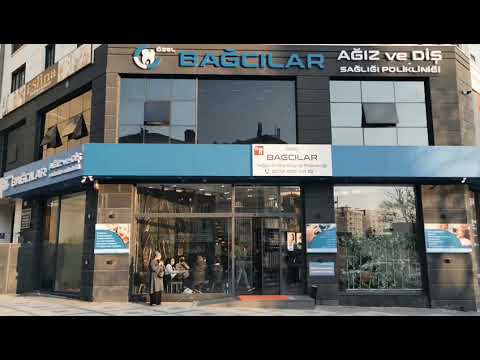
Two things are specific to verifying a clinic in Türkiye and worth knowing before you start. First, dentists are licensed by the Ministry of Health and registered with the Turkish Dental Association, and a named clinician's registration is checkable — which is why asking for the name rather than the clinic is the whole technique. Second, implantology is not a recognised speciality here, so implant specialist is a description rather than a qualification. Neither point is a reason to treat İstanbul differently from London or Munich; both are reasons to ask about the individual. A clinic that has been in Bağcılar for twelve years under one name is easier to check than one that has not, and that is the check worth doing first.