










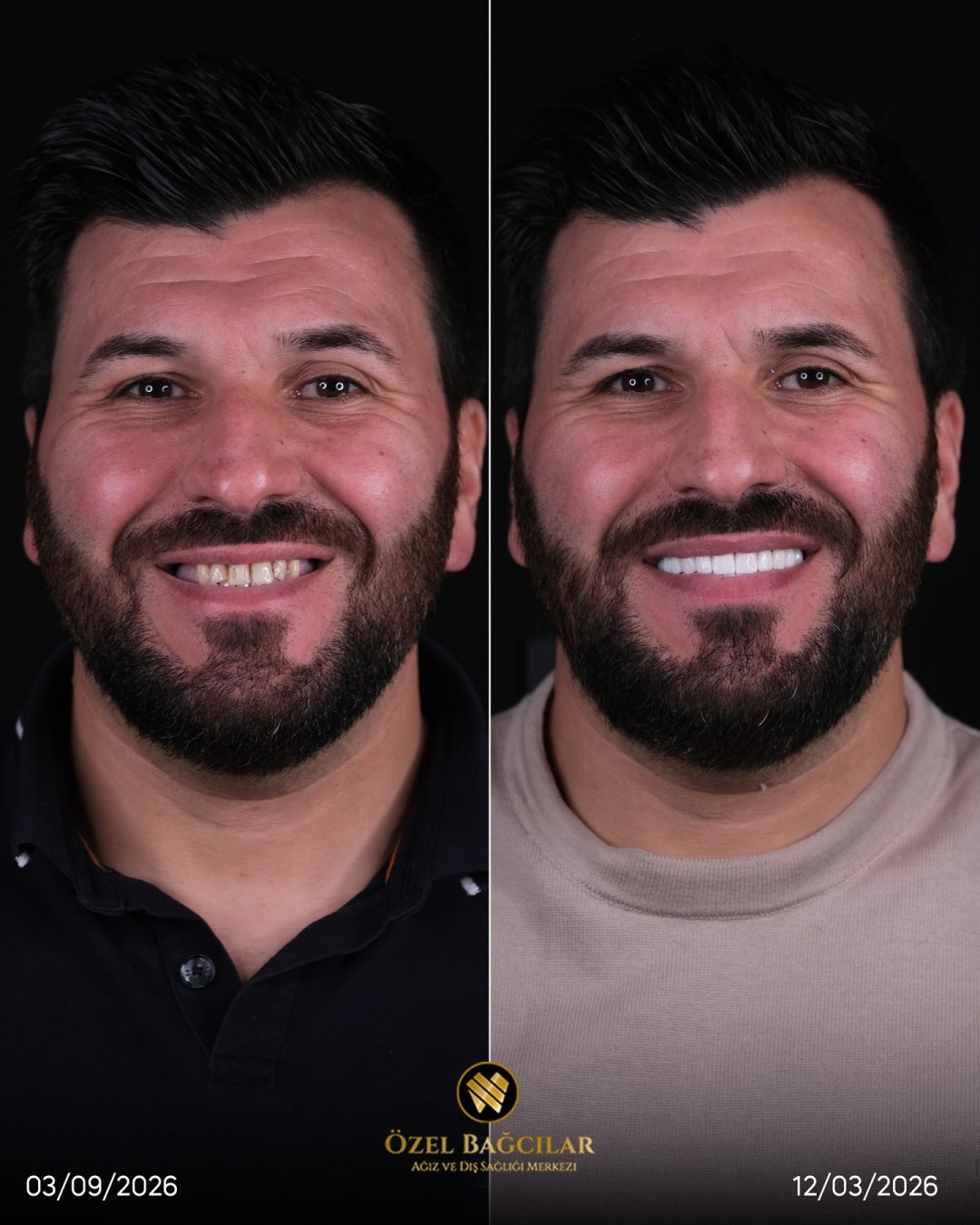
Why the US Position on Treatment in Türkiye Is Different
There is no national dental programme covering adults, so almost everyone is either privately insured, paying directly, or both. That is unlike most of Europe and it changes what the comparison is against.
Private dental insurance in the US is structured around an annual maximum — a ceiling on what the plan pays in a calendar year. Those maximums have historically been low relative to the cost of restorative treatment, and a single implant case frequently exhausts one.
Major restorative work also typically attracts the lowest coinsurance tier, so the patient's share is largest exactly where the treatment is largest. Waiting periods for major services are common in newer policies.
The practical result is that a US patient facing implants or full-arch treatment is usually paying most of it themselves regardless of coverage, and that is the figure the comparison runs against.
Which is why the treatments people travel for from the US skew large. A single filling is not worth a transatlantic flight; a full arch changes the arithmetic entirely — and how that quote is built is where the detail sits.
Insurance, FSA and HSA
Three separate things that get discussed together, and separating them makes each answerable.
Dental insurance: most US plans do not cover treatment received outside the country. Some do, some reimburse at an out-of-network rate, and a few require pre-authorisation. Read your specific plan document rather than assuming, and get any answer in writing.
Flexible Spending Accounts and Health Savings Accounts are a different mechanism and frequently more useful here. Qualified medical and dental expenses are generally eligible regardless of where they were incurred, which can make the treatment effectively pre-tax.
The documentation requirement is the part to plan for. You will need itemised receipts describing the treatment and the amounts, in a form your administrator accepts — which is another reason to insist on itemisation rather than a single figure.
None of this is tax or benefits advice, and plan rules vary enormously. Check with your plan administrator before travelling, and keep every document — the itemised plan and receipts are what any claim or reimbursement runs on.
Getting Here From the US
Istanbul is one of the better-connected cities for transatlantic travel, with direct services from a number of US gateways and one-stop connections from most others.
| From | Typical journey | Notes |
|---|---|---|
| New York area | Direct, roughly ten hours | Several daily services |
| Washington and Boston | Direct or one stop | Direct on some routes |
| Chicago | Direct, roughly eleven hours | Daily on some carriers |
| Miami and Atlanta | Direct or one European stop | Varies by season |
| West Coast | One stop, roughly fourteen to sixteen hours total | Usually via a European hub |
| Time difference | Seven to eight hours ahead of Eastern time | Plan for jet lag |
Choose Istanbul Airport (IST) rather than Sabiha Gökçen where you have the option. IST is on the European side and considerably closer to Bağcılar, and the difference applies to every transfer of the trip rather than only the first.
Jet lag is the practical constraint rather than the flight itself. Arriving a day before the first appointment, rather than going straight from the airport to a consultation, produces a considerably better first day.
Planning the Number of Visits
This matters more from the US than from anywhere else, because a second trip is a genuine commitment rather than a weekend.
Restorative treatment on a healthy foundation — crowns, veneers, a full smile design — is usually one trip of five to seven working days. That is a single journey and it is the case where the arithmetic is simplest.
Implant treatment needs two trips separated by three to six months of integration. That interval is biological and no scheduling changes it, so anyone promising a completed implant case in one transatlantic visit is describing something that does not exist.
What can be done is fitting a fixed temporary bridge at the surgical visit, so you fly home with fixed teeth rather than a gap or a removable appliance. That is standard for full-arch work and available in many single-tooth cases.
Establish the visit count before booking anything. The realistic timetables by treatment are what a proposed schedule should be checked against, and a plan that compresses them has removed something.
Where gum treatment is part of the plan, add a re-evaluation stage to that count. It happens several weeks after the active treatment, so for a visiting patient it usually falls into the second trip rather than the first.
Entry Requirements for US Passport Holders
Straightforward for US passport holders at the time of writing, and worth verifying directly rather than relying on any clinic page including this one.
US citizens can currently enter Turkey without a visa for short stays. Passport validity beyond the date of entry is the requirement that most often catches people out, and it is checked at boarding as well as at the border.
Check the US State Department's country information for Turkey before booking. It is authoritative, it is updated when rules change, and it takes two minutes.
If you hold a passport other than a US one, or dual nationality, the rules may differ — check for the passport you will actually travel on rather than the one you think of as primary.
The entry requirements page covers the position for other nationalities, since US residents do not all travel on US passports.
Check the entry rules for any companion travelling with you as well. Nationality rather than residence determines the requirement, and a family travelling on two different passports occasionally finds that out at the airport.
Before You Fly From the United States
Three things at home, and all of them make the trip work better rather than being formalities.
Get copies of your radiographs and any treatment records from your own dentist. You are entitled to them, and sending them in advance turns the first appointment into a confirmation rather than a starting point.
Deal with anything acute locally. Pain, swelling or active infection needs treating now rather than being saved for a trip weeks away, and travelling with an infection complicates every part of the planning.
Ask whether your dentist will provide ongoing maintenance afterwards. Most will — it is ordinary dentistry — and a minority prefer not to. From the US that matters more, because the alternative is a flight.
Then have a video consultation with the treating clinician before booking anything. The time difference makes scheduling it slightly awkward and it is worth the awkwardness — what that conversation should establish sets out the ground it should cover.
The Time Difference, Practically
Seven to eight hours ahead of Eastern time, ten to eleven ahead of Pacific. That affects communication more than most patients expect, in both directions.
Before you travel, it means a message sent in the US afternoon arrives overnight and is answered the following morning Istanbul time. The practical effect is roughly one exchange per day rather than a conversation.
Building in for that is straightforward: send everything at once — photographs, radiographs, medical history, questions — rather than in a sequence of separate messages that each cost a day.
During the trip it is the jet lag rather than the clock that matters. Arriving a day early and scheduling the first appointment for the second morning makes a noticeable difference to a long consultation.
After you get home it reverses. A message sent in the US evening reaches the clinic first thing, which is convenient for anything that is not urgent and worth knowing for anything that is.
The Records to Take Back to the US
More consequential from the US than from anywhere, because the distance makes reconstruction of missing information genuinely difficult.
Radiographs and CT data, the treatment plan tooth by tooth, material specifications, clinical photographs, the guarantee document, written aftercare, and itemised receipts for any FSA, HSA or insurance claim.
The implant passport is the one that cannot be reconstructed. It records manufacturer, reference and lot number for every fixture, and implant components are proprietary — a dentist in Denver needs it to order the correct part in fifteen years.
Ask us to send the full set directly to your own dentist as well. That makes continuing care straightforward for them rather than something to work out from an image.
Store your copies permanently rather than in the folder you used for the trip — the failure mode that prevents is an implant that is healthy in the bone and cannot be restored above it.
Aftercare From Six Thousand Miles Away
The honest answer is that most of it is ordinary dentistry and none of it requires you to return.
Routine check-ups and hygiene appointments continue with your own dentist, at the interval you are given — which may be shorter than six months after gum treatment or extensive restorative work.
Minor issues are frequently resolved by message with a photograph. A high bite needing adjustment, a temporary that has come off, sensitivity taking longer than expected to settle — these are short local appointments with the records to hand.
Anything falling under the guarantee is handled by us, which is why its terms and its length both matter — ours runs for life, in writing from this distance. What is covered, what voids it, and who pays for travel are questions to settle in writing before treatment.
For anything acute — spreading swelling, fever, difficulty swallowing — seek local emergency care immediately rather than waiting for a reply across a time difference. The aftercare guidance sets out what is normal and what is not.
Where implants were placed, hand the maintenance specifics to your own hygienist. Cleaning at the gum margin around a fixture is what prevents the inflammation that causes bone loss, and that is what ends implants far more often than anything mechanical does.
Materials and Standards
A question US patients ask more directly than most, usually framed around regulatory approval, and it deserves a straight answer.
Implant systems and dental ceramics are globally traded. The major manufacturers sell the same products into the US, Europe and Turkey, and a clinic naming the system it uses is making a claim you can verify against the manufacturer's own documentation.
Regulatory frameworks differ in process rather than in the products they approve. A widely used implant system generally carries both CE marking and FDA clearance, because manufacturers sell into both markets.
What actually varies is which system a clinic chooses, and that is a decision about cost rather than availability. How systems differ sets out what to ask, and the answer should be a name before you pay.
Clinical protocols are the same in both places. Integration takes three to six months, gum treatment needs the same re-evaluation interval, and ceramic bonds the same way to the same enamel.
Combining Treatment With Travel
Practical rather than frivolous, and worth planning deliberately because the flight is long enough that most patients want the trip to be worth making.
Most treatment plans have gaps — a day while the laboratory works, an afternoon between appointments. Istanbul is an easy city to spend those in, and the metro is unaffected by the traffic that makes road journeys unpredictable.
The exception is surgery. The day of an implant placement and the day after are for rest, cold compresses and soft food, and swelling peaks around day two or three rather than immediately.
So the sequencing that works is surgery early, sightseeing in the middle, review appointment at the end. That is how the schedule is built rather than something to negotiate on arrival.
Adding days at the end rather than the beginning is the better shape for a jet lagged traveller — what is worth seeing with limited time is set out with travel times from this side of the city.
The Questions US Patients Ask Most
Four come up repeatedly, and they are worth answering directly rather than deflecting.
Whether it is worth the flight. For implants, full-arch treatment and extensive restorative plans, usually yes — those are the cases where US insurance runs out early. For a crown or a filling, no.
Whether the plan will grow after arrival. That is what the written, imaging-based plan exists to prevent, and it is the single most common complaint in dental travel from any country.
Whether their own dentist will maintain the work. Most will, and asking before travelling rather than after is the version of that question that matters.
And how Turkey compares with Mexico, which for US patients is the real alternative rather than a hypothetical one — the honest comparison is set out separately, including where proximity genuinely wins.
A fifth question sits underneath all of them: how to tell a good clinic from a poor one at a distance. Reviews answer that badly and the written plan answers it well, which is why the documents matter more than anything published about a clinic.
The position differs across North America and Oceania in ways worth checking against your own. The Canadian guide covers annual maximums and provincial variation, and the Australian one covers extras limits and why the visit count dominates from that distance.
How We Work With US Patients
The same as with everyone, with three points that come up specifically because of the distance.
The visit count is established before you book anything. From the US a second trip is a real commitment, and discovering it after the first set of flights is booked is the outcome the planning exists to prevent.
We quote after imaging rather than from photographs, so the figure does not change after arrival. Every tooth is listed with its material and its reason, and where a tooth is sound we say so along with the conservative alternative.
Receipts are itemised against the treatment plan, in a form suitable for FSA, HSA or insurance submission. That costs us nothing and it is frequently worth a meaningful amount to you.
You leave with the full record set including the implant passport, and we will send it to your own dentist directly if you ask. Everything placed carries a lifetime guarantee on materials and workmanship — with the exclusions stated plainly.